
|
Web |
Editors |
eDIGEST June 2009
|
|
|
eDigest
Archives | Upcoming Events | Quick Reference List | Alumni & Student Newsmakers | Faculty in the
News | Recent Faculty Speaking
Engagements & Publications | Videos & Webcasts |
|
ALUMNI AND STUDENT NEWSMAKERS
1. “Governor says $2.8 billion more is needed” (Sacramento Bee, May 30, 2009); story citing MIKE GENEST (MPP 1980); http://www.sacbee.com/capitolandcalifornia/story/1903769.html
2. “Deep Cuts Threaten to Reshape California” (New York Times, May 31, 2009); story citing MIKE GENEST (MPP 1980); http://www.nytimes.com/2009/05/31/us/31calif.html?th&emc=th
3. “
4. “Making Connections: Event photos” (Promise of Berkeley, Spring 2009); story citing BUDD SHENKIN (MPP 1971/MD); http://promise.berkeley.edu/spring_2009/making_connections/
5. “The Children’s Partnership holds a discussion on ‘How National Health Reform Efforts Should Best Address Kids’ Unique Healthcare Needs’” (The Washington Daybook, May 29, 2009); event featuring KAREN POLLITZ (MPP 1982).
6. “Hydrogen Road Tour pauses in W. Sacramento to make case for fuel-cell vehicles” (Sacramento Bee, May 29, 2009); story citing ROLAND HWANG (MPP 1992); http://www.sacbee.com/ourregion/story/1900698.html
7. “This president does not chop brush. Unlike all his predecessors since Kennedy, Obama is an engaged city dweller—just like the majority of Americans” (Salon.c0m, May 26, 2009); column citing LARRY ROSENTHAL (MPP 1993/PhD 2000);
http://www.salon.com/news/feature/2009/05/26/urban_obama/
8. “Head-Royce seniors hit road for AIDS fundraiser” (Oakland Tribune, May 21, 2009); story citing MARK CLOUTIER (MPP/MPH 1993); http://www.insidebayarea.com/search/ci_12420721?IADID=Search-www.insidebayarea.com-www.insidebayarea.com
9. “ACWA Presents Leadership Award to Recycled Water Group; Stakeholder Group Recognized for Breakthrough Effort on Recycled Water Policy” (Marketwire, May 21, 2009); award citing LINDA SHEEHAN (MPP/JD 1990).
10. “UNICEF seeks full access to refugee camps” (UPI, May 20, 2009); newswire citing ANN VENEMAN (MPP 1971).
11. “McClatchy says it will push new ad sales strategy” (Sacramento Bee, May 20, 2009); story citing GARY PRUITT (MPP 1981/JD 1982); http://www.sacbee.com/latest/story/1878059.html
12. “After long fight,
13. “CLIMATE: Point Carbon’s Mazzacurati discusses markup of Waxman-Markey bill” (E&ETV’s OnPoint Vol. 10 No. 9, May 19, 2009); interview with EMILIE MAZZACURATI (MPP 2007); Watch the video
14. “The Paths to Health Care Reform, One Day Conference at TOWN HALL LA” (Marketwire, May 18, 2009); event featuring RUTH LIU (MPP 1999).
15. “Here we go again: Health insurers say they support reform” (Los Angeles Times, May 17, 2009); column citing KAREN POLLITZ (MPP 1982); http://www.latimes.com/business/la-fi-lazarus17-2009may17,0,1334819.column
16. “U.C. Berkeley grads face tough job market” (KGO TV, May 16, 2009); story featuring GSPP commencement and interviews with JOSEPH LEVIN (MPP 2009) and Assistant Dean MARTHA CHAVEZ; http://abclocal.go.com/kgo/story?section=news/local/east_bay&id=6816854
17. “S.F. union rejects agreement—layoffs imminent” (San Francisco Chronicle, May 15, 2009); story citing NANI COLORETTI (MPP 1994); http://www.sfgate.com/cgi-bin/article.cgi?f=/c/a/2009/05/15/BAVA17KNGP.DTL
18. “Schwarzenegger’s budget proposals cut services, school year, state workers” (Sacramento Bee, May 15, 2009); story citing MIKE GENEST (MPP 1980); http://www.sacbee.com/topstories/story/1863556.html
19. “
20. “State may bar gender-based health plans” (San Francisco Chronicle, May 14, 2009); story citing KAREN POLLITZ (MPP 1982); http://www.sfgate.com/cgi-bin/article.cgi?f=/c/a/2009/05/14/BADU17JBSR.DTL
21. “If state cuts too deep, it loses stimulus funds” (San Francisco Chronicle, May 14, 2009); story citing MIKE GENEST (MPP 1980); http://www.sfgate.com/cgi-bin/article.cgi?file=/c/a/2009/05/14/MNR417JULR.DTL
22. “Rockefeller, DeLauro, Schwartz Introduce Health Care Labeling Bill” (Targeted News Service, May 14, 2009); legislation proposal citing KAREN POLLITZ (MPP 1982).
23. “Electric cars let designers bring passion back to work” (Detroit News, May 13, 2009); story citing LUKE TONACHEL (MPP 2004); http://www.detnews.com/article/20090513/OPINION03/905130346/Electric-cars-let-designers-bring-passion-back-to-work/
24. “S.F. board makes deal on Muni budget cuts” (San
Francisco Chronicle, May 13, 2009); story citing CARMEN CHU (MPP 2003); http://www.sfgate.com/cgi-bin/article.cgi?f=/c/a/2009/05/13/BAIP17JERE.DTL
25. “D.A. makes her case” (Philadelphia Daily News, May 13, 2009); story citing STEVE AGOSTINI (MPP 1986); http://www.philly.com/philly/hp/news_update/44859707.html
26. “Obama’s ‘peace dividend’ won’t erase deficits this time” (The Washington Times, May 12, 2009); story citing STAN COLLENDER (MPP 1976).
27. “Health insurance for women remains bastion of ‘gender pricing’” (Sacramento Bee, May 11, 2009); story citing MARIAN MULKEY (MPP/MPH 1989); http://www.sacbee.com/topstories/story/1850215.html
28. “State’s future at stake in May 19 vote”
(San Francisco Chronicle, May 10, 2009); story citing TIM GAGE (MPP 1978); http://www.sfgate.com/cgi-bin/article.cgi?file=/c/a/2009/05/10/MN7317H8HS.DTL
29. “Small elite reaps millions in E.U. farm subsidies” (The International Herald Tribune, May 8, 2009); story citing JACK THURSTON (MPP 1999).
30. “Cutting carbon may be costly - Obama to end oil tax breaks” (Washington Times, May 8, 2009); story citing SKIP HORVATH (MPP 1976); http://www.washingtontimes.com/news/2009/may/08/cutting-carbon-will-aid-savings/
31. “The Center for American Progress (CAP) holds a discussion on ‘Truth in Labeling: Transparency and Health Insurance’” (The Washington Daybook, May 8, 2009); event featuring KAREN POLLITZ (MPP 1982).
32. “If budget measures fail, cities could pay” (San Francisco Chronicle, May 7, 2009); story citing NANI COLORETTI (MPP 1994); http://www.sfgate.com/cgi-bin/article.cgi?f=/c/a/2009/05/07/BAPC17FU69.DTL&type=newsbayarea
33. “Critics unimpressed by Obama’s proposed budget cuts” (Knight Ridder Washington Bureau, May 7, 2009); story citing STAN COLLENDER (MPP 1976).
34. “Swine flu goes person to pig; could it jump back?”
(Lubbock Avalanche-Journal,
35. “Obama urges more scientific research, as DOE pledges $777M for the cause” (Inside Energy with Federal Lands, May 4, 2009); story citing STAN COLLENDER (MPP 1976).
36. “S.F. City Hall split over solar project” (San Francisco Chronicle, May 3, 2009); story citing CARMEN CHU (MPP 2003); http://www.sfgate.com/cgi-bin/article.cgi?f=/c/a/2009/05/03/BA5D17CG6I.DTL
37. “Using Up Benefits. Workers run to get treatments before they lose health insurance” (Press-Enterprise, May 3, 2009); story citing MARIAN MULKEY (MPP/MPH 1989).
38. “Official: Swine flu in ‘declining phase’ in
39. “Broadband Caps: Is A Meter Running While You Read This?”
(Washington Post,
40. “Divorce victory for girl aged 8 who was sold by father;
41. “Royals and multinationals raking in EU farm aid” (EUobserver.com, May 1, 2009); story citing JACK THURSTON (MPP 1999).
42. “The Role of Science in Regulatory Reform” (Congressional
Documents and Publications, April 30, 2009); U.S. Senate Science and Technology
Subcommittee on Investigations and Oversight Hearing, congressional testimony
citing DAVID WEIMER (MPP 1975/PhD
1978), AIDAN VINING (MPP 1974/PhD
1980), and EUGENE BARDACH.
43. “Fed meeting likely to leave policy on
hold as stability returns; Inflation Worry” National Post’s Financial Post
& FP Investing (
44. “Smokers to pay surcharge” (The Associated Press State & Local Wire, April 28, 2009); newswire citing BRIAN HAILE (MPP 2000).
45. “State Experiences with Health Reform” (Federal News Service, April 28, 2009); Hearing of The Senate Health, Education, Labor and Pensions Committee, testimony by RUTH LIU (MPP 1999).
46. “When Irish Mechantronic Backs Go Marching By...” (States News Service, April 22, 2009); newswire citing BILL HEDERMAN (MPP 1974) and SKIP HORVATH (MPP 1976)
47. “The George Washington University’s Institute for
Politics Democracy and the Internet holds its 2009 Politics Online Conference,
April 20-21” (The Washington Daybook, April 20, 2009); event featuring JOHN BROUGHTON (MPP 1984).
48. “HSU Names Top Alumni for 2009” (Targeted News Service,
April 8, 2009); newswire citing RICHARD
WINNIE (MPP 1971/JD 1975).
49. “Swimming pools not complying with federal law - City aquatics centers hurrying to implement drain covers that prevent auction-related injuries or drownings” (Contra Costa Times, March 31, 2009); story citing KEVIN SAFINE (MPP 1994).
50. “Young adults tell of foster-care hardships - Solutions
explored to help those who are aging out of system” (Richmond Times-Dispatch,
March 28, 2009); story citing First Place for Youth, cofounded by AMY LEMLEY (MPP 1998) and DEANNE PEARN (MPP 1998); http://www.timesdispatch.com/rtd/news/local/article/HOME28_20090327-223143/242993/
51. “Castro Valley school district looks to resolve fencing issue” (The Daily Review, March 20, 2009); story citing RICHARD WINNIE (MPP 1971/JD 1975); http://www.insidebayarea.com/search/ci_11954604?IADID=Search-www.insidebayarea.com-www.insidebayarea.com
52. “Bay Area sewer, water projects to get federal stimulus funding” (San Mateo County Times, March 19, 2009); story citing KELLYX NELSON (MPP 2004); http://www.insidebayarea.com/search/ci_11951672?IADID=Search-www.insidebayarea.com-www.insidebayarea.com
FACULTY IN THE NEWS
1. “Minority students will reach for a higher bar” (San Francisco Chronicle, May 31, 2009); op-ed by DAVID KIRP; http://www.sfgate.com/cgi-bin/article.cgi?f=/c/a/2009/05/31/ING317S58S.DTL&type=printable
2. “Smart People: Dan Kammen, Professor, Energy and Resources Group, UC Berkeley” (Smart Planet, May 29, 2009); local climate solutions video featuring DAN KAMMEN; video link
3. “An Attack on Preschool for All” (Washington Post, May 29, 2009); column citing DAVID KIRP; http://voices.washingtonpost.com/class-struggle/2009/05/an_attack_on_preschool_for_all.html
4. “Manufacturing Jobs Are Never Coming Back” – Commentary by ROBERT REICH (Forbes Magazine, May 28, 2009); http://www.forbes.com/2009/05/28/robert-reich-manufacturing-business-economy_print.html
5. “Where recession can hurt clean energy” (Marketplace [NPR], May 28, 2009); features commentary by DAN KAMMEN; http://marketplace.publicradio.org/display/web/2009/05/28/am_/
6. “Obama Calls on Berkeley School of Antitrust” (States News Service, May 28, 2009); newswire citing ROBERT REICH.
7. “Nation; Inside Politics” (The Washington Times, May 27, 2009); column citing ROBERT REICH; http://www.washingtontimes.com/news/2009/may/27/inside-politics-26211479/?page=2
8. “Are Democrats giving away the store on health care reform?” (The Ed Show, MSNBC, May 27, 2009); interview with ROBERT REICH.
9. “A fair plan to make college affordable” – Commentary by ROBERT REICH (Marketplace [NPR], May 22, 2009); Listen to this commentary
10. “California Voters Go to Polls on Budget Propositions” (PBS Newshour, May 19, 2009); features interview with JOHN ELLWOOD; http://www.pbs.org/newshour/bb/politics/jan-june09/ca_budget_05-19.html
11. “In
12. “Budget Bind; Budget Mess” (World News with
Charles Gibson, ABC News, May 19, 2009); features commentary by JOHN ELLWOOD.
13. “Real medical reform: Gravely ill. ‘Single-payer’ isn’t mentioned anymore, and now even Obama’s Medicare-like public insurance initiative looks unlikely” (Salon.com, May 18, 2009); commentary by ROBERT REICH; http://www.salon.com/opinion/feature/2009/05/18/public_insurance/
14. “Blue-Ribbon Search for The Bottom” (The Washington Post, May 16, 2009); column citing ROBERT REICH; http://voices.washingtonpost.com/local-address/2009/05/live_blogging_todays_realtors.html
15. “How the state budget deficit started” (KGO TV, May 14, 2009); features commentary by JOHN ELLWOOD; http://abclocal.go.com/kgo/story?section=news/politics&id=6814183
16. “The truth about Social Security and Medicare. Social Security is a tiny problem, but Medicare is entirely different. It’s a monster” (Salon.com, May 13, 2009); commentary by ROBERT REICH; http://www.salon.com/opinion/feature/2009/05/13/reich/
17. “Legalize pot? Advocates thrilled with change in polls, governor’s call for debate” (Contra Costa Times, May 13, 2009); story citing ROBERT MACCOUN; http://www.contracostatimes.com/search/ci_12353484?IADID=Search-www.contracostatimes.com-www.contracostatimes.com
18. “Obama Adviser Sees Unemployment Rising Until 2010” (The New York Times, May 11, 2009); story citing ROBERT REICH.
19. “Roundtable: Economic mending?” (This Week with George Stephanopoulos, ABC News, May 10, 2009);
features commentary by ROBERT REICH.
20. “Sounds Great, But What Does He Really Mean?” (The Washington Post, May 10, 2009); analysis citing ROBERT REICH; http://www.washingtonpost.com/wp-dyn/content/article/2009/05/08/AR2009050801864.html
21. “Under Restructuring, GM to Build More Cars
Overseas” (Washington Post, May 8, 2009); story citing ROBERT REICH; http://www.washingtonpost.com/wp-dyn/content/article/2009/05/07/AR2009050704336.html
22. “Study:
23. “EPA’s New Biofuel Regs Could Curtail Industry” (Weekend Edition Sunday, NPR,
May 10, 2009); features commentary by DAN
KAMMEN; Listen to
this story
24. “Biofuels vs.
Biomass Electricity. Findings show that turning biomass into electricity is
more beneficial than turning it into transportation fuels” (Technology Review,
May 8, 2009); story citing model developed by DAN KAMMEN, MICHAEL O’HARE,
BRIAN TURNER (MPP 2006); http://www.technologyreview.com/energy/22628/
25. “We own the banks. Now what do we do with
them? As the majority shareholders in failing banks, the American public should
push management to cut executive compensation and make more loans to Main
Street” (Salon.com, May 8, 2009); commentary by ROBERT REICH; http://www.salon.com/opinion/feature/2009/05/08/reich/
26. “Mentoring is its own reward…but plaques are
nice, too. The Grad Division and the Graduate Assembly team up to honor GSIs and the faculty who guide them” (Berkeleyan,
27. “Has Capitalism Failed?” (On Point with Tom Ashbrook, WBUR & NPR,
28. “Do Plug-in Hybrids Fight Global Warming?
They do, according to a recent
29. “Debate over global warming plan heats up
30. “Obama, the enemy of economic inequality. The
“ruthless pragmatist” is actually passionate about a central moral issue of
modern American life—the lopsided distribution of political and economic power”
(Salon.com,
31. “Go after tax havens to help health care” – Commentary by ROBERT REICH (Marketplace [NPR], May 6, 2009); Listen to this Commentary
32. “Is Company Cost-Cutting Company Throat-Slitting?” (TECHWEB, May 6, 2009); story citing ROBERT REICH.
33. “Where Did All the Doctors Go?” (New York
Times,
34. “After the Great Recession” (New York Times Sunday Magazine, May 3, 2009); interview with The President citing ROBERT REICH; http://www.nytimes.com/2009/05/03/magazine/03Obama-t.html?pagewanted=4&_r=1
35. “Economix Blog: Robert Reich on Power” (New York Times Online, April 30, 2009); blog citing ROBERT REICH; http://economix.blogs.nytimes.com/2009/04/30/robert-reich-on-power/
36. “Jewish Sports Hall of Fame of
37. “Getting Smarter About IQ” (The American Prospect, May 1, 2009); book review and commentary by DAVID KIRP; http://www.prospect.org/cs/articles?article=getting_smarter_about_iq
38. “The verdict: Commentators give early
backing” (The Guardian (
1. “Governor says $2.8 billion more is needed” (Sacramento Bee, May 30, 2009); story citing MIKE GENEST (MPP 1980); http://www.sacbee.com/capitolandcalifornia/story/1903769.html
By Kevin Yamamura
Gov. Arnold Schwarzenegger is more chess player than card shark, but his dramatic plans to slash state government have left program advocates wondering if he’s attempting a giant bluff.
Schwarzenegger’s finance aides insist that proposals to eliminate welfare grants and close 220 state parks are very real. Department of Finance Director Mike Genest said Friday that to suggest otherwise in the face of a $24.3 billion deficit is “ridiculous.”
“The governor would be more than thrilled if somebody could come up with a way to not cut this or that program while still achieving the bottom line,” said Genest. “I challenge anyone to put a specific legislative action on the table that will eliminate ($24.3 billion) in waste, fraud and abuse.” …
2. “Deep Cuts Threaten to Reshape California” (New York Times, May 31, 2009); story citing MIKE GENEST (MPP 1980); http://www.nytimes.com/2009/05/31/us/31calif.html?th&emc=th
By Jennifer Steinhauer
Gov. Arnold Schwarzenegger, left, with Mike Genest,
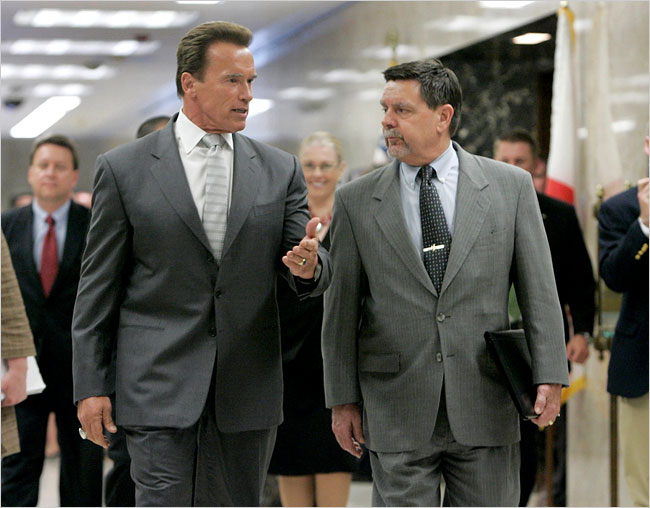
LOS ANGELES — Gov. Arnold
Schwarzenegger did not get the election results he sought. Now he seems
determined to show
In a special election on May
19, voters rejected a batch of measures on increasing taxes, borrowing funds
and reapportioning state money that were designed to close a
multibillion-dollar budget gap. The cuts Mr. Schwarzenegger has proposed to
make up the difference, if enacted by the Legislature, would turn
Nearly all of the billions of dollars in cuts the administration has proposed would affect programs for poor Californians, although prisons and schools would take hits, as well.
“Government doesn’t provide services to rich people,” Mike Genest, the state’s finance director, said on a conference call with reporters on Friday. “It doesn’t even really provide services to the middle class.” He added: “You have to cut where the money is.” …
3. “
By Tania Branigan
… It has been decades since
American bombs rocked
But now it appears that the
North may be exhausting
Tougher action is not
unprecedented. As well as clear diplomatic condemnation of weapons tests, China
briefly cut off oil supplies in 2003, and again three years later after the
North’s first nuclear and long distance missile test. It has tightened visas
for North Koreans and helped scrutinise bank accounts
when the
“
4. “Making Connections: Event photos” (Promise of Berkeley, Spring 2009); story citing BUDD SHENKIN (MPP 1971/MD); http://promise.berkeley.edu/spring_2009/making_connections/
Bob Wong ‘68, Professor Emeritus and Nobel laureate Charles Townes,
and Budd Shenkin M.P.P. ‘71

The
5. “The Children’s Partnership holds a discussion on ‘How National Health Reform Efforts Should Best Address Kids’ Unique Healthcare Needs’ “ (The Washington Daybook, May 29, 2009); event featuring KAREN POLLITZ (MPP 1982).
…PARTICIPANTS: Cindy Mann, executive director of the Center for Children and Families at Georgetown University; Karen Pollitz, research professor at the Health Policy Institute of Georgetown University; David Tayloe, president of the American Academy of Pediatrics; David Cutler of Harvard University; and Bruce Lesley, president of First Focus; Kristen Golden Testa, director of California health at the Children’s Partnership; and Karen Davenport, director of health policy at the Center for American Progress Action Fund….
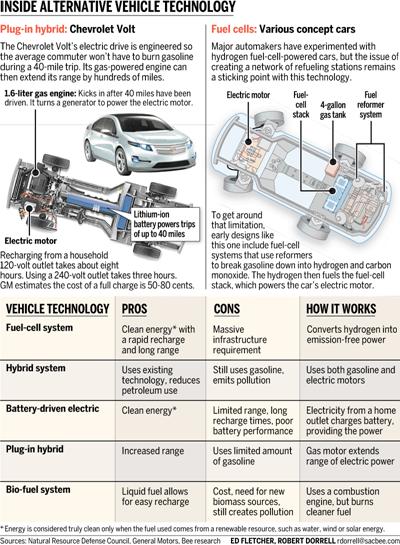
6. “Hydrogen Road Tour pauses in W. Sacramento to make case for fuel-cell vehicles” (Sacramento Bee, May 29, 2009); story citing ROLAND HWANG (MPP 1992); http://www.sacbee.com/ourregion/story/1900698.html
By Ed Fletcher
Rather than the expected shot in the arm from the Obama administration, backers of ultra-clean hydrogen vehicles got a punch in the gut earlier this month when the federal government recommended a dramatic cut in funds for fuel-cell research….
“We’re on the verge of
having fuel-cell vehicles as a practical alternative,” said Dave Barthmuss, spokesman for General Motors’ environment and
energy group, as the vehicles rolled toward
The Obama administration has proposed cutting $100 million from the current-year budget of $169 million to free up resources for technologies that appear more promising….
The administration proposal makes short-term sense, said Bradley Berman, editor of HybridCars.com.
“All eyes are on better technologies,” said Berman. “In that light, it makes total sense. The quest for a robust, powerful auto battery … is immediate. It’s right now.” …
Mary Nichols, chairwoman of Schwarzenegger’s California Air Resources Board, sent a letter asking federal officials to reconsider fuel-cell funding.
“Today it is not possible to know which technologies will be the market winners, but given that our global climate and future mobility are at stake, we must pursue all promising options,” Nichols wrote.
Roland Hwang of the Natural Resources Defense Council, a nonprofit environmental advocacy group, agreed with Nichols’ assessment.
“It would be premature to pull the plug on any one of (the technologies),” Hwang said. “In the long term, we have to kick the petroleum habit.”
7. “This president does not chop brush. Unlike all his predecessors since Kennedy, Obama is an engaged city dweller—just like the majority of Americans” (Salon.c0m, May 26, 2009); column citing LARRY ROSENTHAL (MPP 1993/PhD 2000);
http://www.salon.com/news/feature/2009/05/26/urban_obama/
By Mike Madden
Salon composite/Reuters photo
 It didn’t take long for Barack Obama to make
clear that the days when the president would flee the White House, and the
It didn’t take long for Barack Obama to make
clear that the days when the president would flee the White House, and the
“We all share the same vision for our cities,” he said in February, the day after he signed an executive order establishing a White House Office of Urban Affairs. “Vibrant places that provide our children with every chance to learn and to grow, that allow our businesses and workers the best opportunity to innovate and succeed, that let our older Americans live out their best years in the midst of all that metropolitan life can offer.”...
Having an
urbanite-in-chief in the White House has already raised the hopes of mayors,
policy experts and activists. “His heart is in the right place,” says Larry Rosenthal, executive director of the
8. “Head-Royce seniors hit road for AIDS fundraiser” (Oakland Tribune, May 21, 2009); story citing MARK CLOUTIER (MPP/MPH 1993); http://www.insidebayarea.com/search/ci_12420721?IADID=Search-www.insidebayarea.com-www.insidebayarea.com
By J.M. Brown, Correspondent
As part of their monthlong senior projects in May, most 12th-graders at
But Jacqueline DeJesse and Richard Normington have decided instead to hit the road.
At 18, the two are the
youngest cyclists participating in the
“These kids are good representatives of the Head-Royce student body — hardworking and committed to expanding their own growth and helping the community at large,” [senior dean Barry] Barankin said. “(Doing the ride) is a perfect fit for the kinds of kids we’re happy to have at Head-Royce.”
In an interview at
“People come to AIDS/LifeCycle to fight a disease,” Mark Cloutier, CEO of the AIDS Foundation who is also participating in the ride, said in a statement. “But the event is also a celebration of health. Participants have the physical strength to complete a challenging course, and the emotional connectedness to help others succeed on an exhausting, yet exhilarating journey.” …
For information about the AIDS ride, visit www.sfaf.org .
The Bunny Team of volunteers offers cyclists snacks and support outside Pescadero during an early leg of the eighth annual AIDS/LifeCycle, which attracted more than 2,100 bicyclists. (From the S.F. Chronicle, June 1, 2009, story on the event.)

9. “ACWA Presents Leadership Award to Recycled Water Group; Stakeholder Group Recognized for Breakthrough Effort on Recycled Water Policy” (Marketwire, May 21, 2009); award citing LINDA SHEEHAN (MPP/JD 1990).
The effort, launched in response to a draft policy by the State Water Resources Control Board, was aimed at bringing a new approach to the task of balancing existing state policies on protecting water quality and encouraging water recycling.
“This award is ACWA’s way of recognizing leadership and contributions that
make a lasting difference in
“They took on a tremendous challenge, and the result is a policy framework that makes the permitting process more predictable for recycled water projects,” Peterson said. “This is a terrific model for collaborating on policy reforms in many other regulatory areas.” …
Participants in the Recycled Water Stakeholders Group include: David Aladjem, Downey Brand; Jonathan Bishop, State Water Resources Control Board; Martha Davis, Inland Empire Utilities Agency; Gus Dembegiotes, Los Angeles Bureau of Sanitation; Conner Everts, Environment Now; Mark Gold, Heal the Bay; Bob Hultquist, Department of Public Health; Roberta Larson, Somach Simmons & Dunn; Mindy McIntyre, Planning & Conservation League; Bert Michalczyk, Dublin San Ramon Services District; Linda Sheehan, California Coastkeeper Alliance, Fran Spivy-Weber, State Water Resources Control Board; Nancy Sutley, formerly with the City of Los Angeles; Gary Wolff, former member of the State Water Resources Control Board; and Gary Yamamoto, Department of Public Health….
10. “UNICEF seeks full access to refugee camps” (UPI, May 20, 2009); newswire citing ANN VENEMAN (MPP 1971).
As the
In a statement, she said there have been reports that access to some of the refugee camps had become restricted.
“Full and unimpeded humanitarian access must be ensured so that children and women can receive the assistance they so desperately need,” she said.
The statement said the displaced persons were arriving at the camps “sick, malnourished and some with untended wounds of war.”
By the end of this week, “the number of internally displaced people in camps is expected to have grown to more than a quarter of a million people since late April.”
Veneman said such a massive influx of people “will put an even greater strain on the health, sanitation, and water systems in internally displaced persons camps.” …
11. “McClatchy says it will push new ad sales strategy” (Sacramento Bee, May 20, 2009); story citing GARY PRUITT (MPP 1981/JD 1982); http://www.sacbee.com/latest/story/1878059.html
By Dale Kasler
The McClatchy Co., seeking to reverse a steep slump in advertising, today announced a five-point sales strategy that emphasizes the Internet and seeks to reconnect the company with former advertisers.
In one of the boldest moves, McClatchy will begin paying sales commissions to ad agencies, a move that will “level the playing field” with broadcasters and others that have traditionally paid commissions to agencies, said McClatchy Chairman and Chief Executive Gary Pruitt. “We haven’t done that for years,” he said.
In addition, the Sacramento-based newspaper chain will emphasize the Web instead of its newspapers when it comes to selling help-wanted ads. The shift is a recognition of the severe decline in help-wanted sales and the fact that “employers and job seekers are using the Internet,” Pruitt said. The print papers will serve as a “complement” to Career Builder, which is partly owned by McClatchy, and other online venues, he said.
He called that strategy “a break with tradition.” …
Pruitt told shareholders the company will prevail, but he acknowledged, “We have a serious fight on our hands.” …
12. “After long fight,
By Jim Downing
President Barack Obama did most of the talking at Tuesday’s launch of the nation’s first greenhouse-gas restrictions for cars, but the spotlight was on the Californians sitting in the front row in the White House Rose Garden.
After millions in legal costs and years of delays, the state’s emissions rules are now national policy, set to drive a nearly 40 percent increase in vehicle fuel efficiency by 2016.
“This has been a huge
victory for the state of
It’s been more than eight years since state Sen. Fran Pavley, D-Agoura Hills, then in her first weeks in the Assembly, introduced the vehicle emissions bill that eventually led to Tuesday’s announcement….
Automakers sued to block the rules, arguing the emissions standards would drive up costs by thousands of dollars a vehicle….
In 2006, Schwarzenegger signed a bill committing the state to trim greenhouse gas emissions from nearly all sectors of the economy to 1990 levels by 2020. California Air Resources Board regulators have been counting on AB 1493 to deliver nearly a fifth of those cuts.
The stalemate over the
bill began to break last fall in a series of meetings between state air quality
regulators, their environmental allies, and officials from Ford, General
Motors, Honda and
“What everybody realized was that there was real interest in trying to unknot these problems,” said Roland Hwang, vehicle policy director at the Natural Resources Defense Council, who was at the meetings….
13. “CLIMATE: Point Carbon’s Mazzacurati discusses markup of Waxman-Markey bill” (E&ETV’s OnPoint Vol. 10 No. 9, May 19, 2009); interview with EMILIE MAZZACURATI (MPP 2007); Watch the video
 As the House Energy and Commerce Committee marks up the “American Clean Energy and Security Act” this
week, what are the most contentious issues up for debate? During today’s OnPoint, Emilie Mazzacurati, manager for Carbon Market Research at
Point Carbon, discusses a recent analysis of the legislation and assesses who
are the biggest winners and losers. She also gives her take on the tight
deadlines set in the House for moving this legislation….
As the House Energy and Commerce Committee marks up the “American Clean Energy and Security Act” this
week, what are the most contentious issues up for debate? During today’s OnPoint, Emilie Mazzacurati, manager for Carbon Market Research at
Point Carbon, discusses a recent analysis of the legislation and assesses who
are the biggest winners and losers. She also gives her take on the tight
deadlines set in the House for moving this legislation….
Monica Trauzzi: How much do you think [President Obama]’s feeling
international pressure to get something through before
Emilie Mazzacurati: There is
international pressure, but more than that I think there is a genuine desire
from his administration to give back the
Monica Trauzzi: On the proposed endangerment finding, if Congress does not pass legislation this year, how would you expect EPA to start acting in order to regulate emissions?
Emilie Mazzacurati: I think the EPA would do something pretty different than what Congress would do and the EPA would probably make a mix of standards and some market-based mechanisms. And I would expect the EPA to start with the standards to put a little bit of pressure on Congress and to start with what they do best and then keep on moving with market-based mechanisms. But I believe Congress would rather do their own thing and make sure that it served the interests of their constituents best.
Monica Trauzzi: And Point Carbon just released an analysis of the Waxman-Markey draft. Who are the biggest winners and losers in that legislation?
Emilie Mazzacurati: Well, there’s different ways to look at it. The power sector would be under pretty strict regulation, more renewables, more energy efficiency, and it’s not so much a matter of winning or losing, but they would have to reduce their emissions a lot through standards and cap and trade. The industrial sectors, especially the ones that are exposed to international competition might come out with quite a bit of subsidies in the form of rebates to help them meet their compliance requirements and they would probably come out all right.
Monica Trauzzi: The House is really seen as a lab for creating some type of workable legislation that could also be passed on and worked on in the Senate. Is this draft too aggressive for lawmakers to agree on, particularly in the manufacturing states?
Emilie Mazzacurati: Well, I think you have to start with something aggressive so that at the end of the day you have something that still holds water and has a little bit of teeth. Manufacturing states and industrial sectors, in particular chemical sectors, cement, metals, pulp and paper, are very well taken care of in the bill. The bill includes a provision that was drafted by Representatives Inslee and Doyle that really addresses the concerns of those industries. And, of course, they’re still asking for more, but at the end of the day, if the draft stays as it is they’ll be fine, they’re covered….
14. “The Paths to Health Care Reform, One Day Conference at TOWN HALL LA” (Marketwire, May 18, 2009); event featuring RUTH LIU (MPP 1999).
LOS ANGELES, CA -- “Real Facts, Hard Choices: Identifying Paths to Health Care Reform” is a one day conference hosted by TOWN HALL LA, Friday, May 22, 2009, at the Fairmont Miramar Hotel.
Employer-sponsored
health insurance premiums have doubled in the last nine years, a rate six times
faster than cumulative wage increases. In 2007, the
The day begins with Panel 1: How Do We Define Reform? Panelists: Ruth Liu, Senior Director of Health Policy, Kaiser Permanente; ….
15. “Here we go again: Health insurers say they support reform” (Los Angeles Times, May 17, 2009); column citing KAREN POLLITZ (MPP 1982); http://www.latimes.com/business/la-fi-lazarus17-2009may17,0,1334819.column
By David Lazarus
It sure was nice seeing representatives of the insurance industry sitting down with the president and declaring that they know the healthcare system needs to be overhauled and that they definitely want to be part of the solution.
Just one small thing: Does anybody trust them?
I spoke last week with a variety of healthcare experts, and not one could give me a “yes” to that question….
[Alain Enthoven, a professor emeritus at the Stanford Graduate School of Business who served as a consultant to the Carter administration on healthcare issues] pointed out that when he and others crafted a plan for universal coverage in the 1970s, the insurance industry proudly announced that it was ready to compromise to serve the nation’s best interests.
“Nothing came of it,” Enthoven said. “The whole thing was just a joke.”
Karen Pollitz, a research professor at
Georgetown University’s Health Policy Institute and a former health
official in the
“They said they wanted to be at the table and wanted to deal,” she recalled. “Then they all left. They saw that they could kill it.”…
16. “U.C. Berkeley grads face tough job market” (KGO TV, May 16, 2009); story featuring GSPP commencement and interviews with JOSEPH LEVIN (MPP 2009) and Assistant Dean MARTHA CHAVEZ; http://abclocal.go.com/kgo/story?section=news/local/east_bay&id=6816854
By Lisa Amin
“There was a lot of
waiting at first because jobs that would’ve been available much earlier in
February, we were told positions just haven’t been released because of budget
crunch everywhere. So, it’s been I think a real strain for people looking for
local and state jobs,” [
“We did start them earlier this year. We also asked them to have longer lists of employers. It’s really important to not just target a few, but target a lot more this year because of the economy,” said Assistant Dean of Academic Affairs Martha Chavez.
The persistence paid off for Joe Levin. He landed a job with the federal government where cutbacks are not happening as quickly as at the state level.
“There’s a lot of opportunity in the federal government, but there’s a lot of competition because everyone is flocking there,” he said….
17. “S.F. union rejects agreement—layoffs imminent” (San Francisco Chronicle, May 15, 2009); story citing NANI COLORETTI (MPP 1994); http://www.sfgate.com/cgi-bin/article.cgi?f=/c/a/2009/05/15/BAVA17KNGP.DTL
--Heather Knight, Marisa Lagos, Chronicle Staff Writers
San Francisco Mayor Gavin Newsom on Thursday said layoffs of hundreds of union members will begin immediately and demanded millions more in cuts from his departments following the rejection of contract concessions by the city’s biggest union.
Members of SEIU 1021—which covers more than 11,000 city workers including janitors, security guards and health care workers—rejected changes to their contract that would have saved the city $38 million in the 2009-10 fiscal year that starts July 1. Newsom hoped SEIU would agree to concessions, prompting other unions to follow suit for a total savings of $90 million….
The city’s $6.6 billion budget has a $438 million deficit, and the mayor was counting on the $90 million to help fill it. His budget director, Nani Coloretti, said the city now needs to find about $180 million to reach the $438 million mark—and that doesn’t include an expected $93 million hit if Tuesday’s state ballot measures fail and the state taps local governments to bridge its own deficit….
18. “Schwarzenegger’s budget proposals cut services, school year, state workers” (Sacramento Bee, May 15, 2009); story citing MIKE GENEST (MPP 1980); http://www.sacbee.com/topstories/story/1863556.html
By Kevin Yamamura and Steve Wiegand
Gov. Arnold
Schwarzenegger proposed dire budget plans Thursday that slash core public
services and push
Under the governor’s
budget scenarios, schools could let out students five to seven days early, an
oil company would drill into
Schwarzenegger offered two proposals Thursday – one that bridges a $15.4 billion gap if three ballot measures pass next week, and another that closes a $21.3 billion shortfall if the measures fail. The latter plan was different largely in the severity of school cuts and burdens placed on cities and counties….
The Republican governor’s proposals to balance the tottering state budget include up to $9 billion in cuts – as much as $5.4 billion of which could come from school spending. They also include laying off 5,000 state workers and borrowing a staggering $7.5 billion from financially strapped local governments and a cash-barren investment market….
Finance Director Mike Genest said the Legislature must prioritize cutting $1 billion from schools by June 30 to take advantage of savings in this fiscal year and reduce the amount owed to education next year. Genest said the state can cut K-14 schools a full $5.4 billion without running afoul of federal stimulus requirements that the state maintain its education funding at 2006 levels….
19. “
By Jon Ortiz
State workers were outraged and anxious on Tuesday after learning that Gov. Arnold Schwarzenegger wants to lay off 5,000 of them in the coming weeks.
Although the administration didn’t break down which departments would lose jobs, it did say the Department of Corrections and Rehabilitation, which runs the state prison system, would lose the most positions.
And one official said
the state may need to cut more jobs if
Finance Director Mike Genest said that “there is no way to know” exactly how much money the government will save by cutting what amounts to about 5 percent of the 100,000 state jobs paid from general fund money….
Salaries, mostly for correctional officers, have added more than $1 billion to the department’s expenses in the past decade….
20. “State may bar gender-based health plans” (San Francisco Chronicle, May 14, 2009); story citing KAREN POLLITZ (MPP 1982); http://www.sfgate.com/cgi-bin/article.cgi?f=/c/a/2009/05/14/BADU17JBSR.DTL
--Wyatt Buchanan, Chronicle Staff Writer
(05-14) 04:00 PDT
A comparison of
identical health plans for men and women, not including maternity coverage,
found that 25-year-old women in
The separate pricing reflects the fact that women use health services more than men at younger ages and men use more at older ages, said Charles Bacchi, interim president and CEO of the California Association of Health Plans, which represents insurance providers in the state….
Karen L. Pollitz, project director of the health policy institute at Georgetown University, said asking whether this practice, or others based on things like age, can be justified financially misses the point.
“I think all of these practices are harmful and I’m less interested in what is actuarially justified. This is how we provide health care and people need health care,” Pollitz said.
21. “If state cuts too deep, it loses stimulus funds” (San Francisco Chronicle, May 14, 2009); story citing MIKE GENEST (MPP 1980); http://www.sfgate.com/cgi-bin/article.cgi?file=/c/a/2009/05/14/MNR417JULR.DTL
--Matthew Yi, Chronicle
(05-14) 04:00 PDT
Services that face
federal rules in
Under federal stimulus
rules,
State Director of Finance Mike Genest said Wednesday that while there is no federal waiver provision for federal dollars for the state’s health care system, the state can seek a waiver for funds received for education. He would not say whether the governor would seek such an exemption….
22. “Rockefeller, DeLauro, Schwartz Introduce Health Care Labeling Bill” (Targeted News Service, May 14, 2009); legislation proposal citing KAREN POLLITZ (MPP 1982).
WASHINGTON -- On the heels of a recently released report [coauthored by Karen Pollitz] urging greater transparency and better tools to help consumers compare health coverage, U.S. Senator John D. (Jay) Rockefeller IV and Congresswomen Rosa DeLauro and Allyson Schwartz introduced legislation today to bring much-needed simplicity and key facts on health coverage to consumers through the creation of a “Coverage Facts” label for health care plans—similar to the “nutrition label” on packaged foods….
The creation of a standardized comparison tool is supported by a recently released report, “Coverage When It Counts” which studied the adequacy and transparency of health insurance and found that a person undergoing a typical course of breast cancer treatment would end up spending nearly $4000 in one plan but $38,000 in the other plan - even though they had similar deductibles, co-pays, and “out-of-pocket limits.”
Karen Pollitz, co-author of the report, and a research professor and project director at the Georgetown University Health Policy Institute, added, “Health care coverage should ensure that patients get the health care they need and that they are protected financially in case they get sick. For many consumers, having the right health care coverage can mean the difference between health security and financial catastrophe—yet consumers often cannot tell if a particular insurance policy will be adequate because of hidden contract terms and confusion about covered benefits and cost sharing. The Informed Consumer Choices in Health Care Act of 2009 would bring a refreshing and necessary dose of simplicity to the process of purchasing health care coverage—which in the end will help protect families’ health and financial security.” …
23. “Electric cars let designers bring passion back to work” (Detroit News, May 13, 2009); story citing LUKE TONACHEL (MPP 2004); http://www.detnews.com/article/20090513/OPINION03/905130346/Electric-cars-let-designers-bring-passion-back-to-work/
By Scott Burgess / The
Fisker Karma
 … Next year, a number of carmakers will debut
fully electric vehicles or plug-in hybrids that use a combination of electric
motors and gasoline engines to take to the road.
… Next year, a number of carmakers will debut
fully electric vehicles or plug-in hybrids that use a combination of electric
motors and gasoline engines to take to the road.
For car designers, these
new vehicles are creating opportunities to rethink how to create a car,
eliminating some of the restrictions that have been in place with gas engines….
Removing a car's engine,
heavy-duty cooling system and gas tank creates an opportunity to build more
spacious interiors and dramatic exteriors that have never been seen before….
Electric cars also could
become safer than their gas counterparts, said Doug Frasher,
strategic design chief for Volvo Cars of North America.
"Engines right now
don't give much in an accident," he said.
"They are things we
have to design around, and without one, you can create much different crumple
zones in a car." …
The environmental impact
also is dramatic, said Luke Tonachel, a vehicle analyst for the Natural Resources
Defense Council, an environmental action group.
"(Electric)
vehicles are an essential component to cutting carbon pollution," he said….
Despite their promise,
many issues, such as extending the range of some electric vehicles far beyond
100 miles, remain, the group agreed.
Infrastructure issues
also must be addressed and more incentives need to be offered to entice people
to buy them, Tonachel
said.
But, the new opportunities create an exciting future for designers….
24. “S.F. board makes
deal on Muni budget cuts” (San Francisco Chronicle, May 13, 2009); story citing
CARMEN CHU (MPP 2003); http://www.sfgate.com/cgi-bin/article.cgi?f=/c/a/2009/05/13/BAIP17JERE.DTL
--Rachel Gordon, Chronicle
Staff Writer

The compromise, say
those who supported it after a day of closed-door negotiations at City Hall, is
intended to blunt the impact of planned transit service cuts and to temporarily
delay one fare increase for seniors, the disabled and youth.
But the agreement will
not stop the agency - forced to close a $129 million deficit - from raising
fares and eliminating or paring back about half of its 80 lines. Starting July
1, the basic cash fare for adults will jump to $2, a 50-cent increase, and the
discounted fare for seniors, the disabled and youth will go up to 75 cents, a
25-cent increase….
The only fare that will
decrease is for poor people who qualify for a “lifeline” pass. Instead of
paying $35 a month, they’ll pay $30. About 6,500 people a month now use the
pass.
As part of the deal,
Muni agreed to reduce the number of workers it planned to hire to crack down on
fare cheats. The agency also will look at expanding parking meter enforcement
hours to
Joining Chiu in support
of Muni’s budget were Supervisors Carmen
Chu, Sean Elsbernd, Bevan Dufty,
Sophie Maxwell and Michela Alioto-Pier. Opposed were
25. “D.A. makes her case” (Philadelphia Daily News, May 13, 2009); story citing STEVE AGOSTINI (MPP 1986); http://www.philly.com/philly/hp/news_update/44859707.html
By Catherine Lucey
The Nutter administration has agreed to restore some of the funding it had proposed cutting from the district attorney’s budget.
D.A. Lynne Abraham last week blasted Mayor Nutter for proposing to cut $7 million from the $32 million budget approved by Council a year ago. She said the cut would force her to eliminate prosecutors.
Budget Director Steve Agostini yesterday said about $4 million would be restored to the district attorney, giving the office $29 million for the upcoming fiscal year. He said most of the money likely would come from the city’s general fund.
Agostini said the city struck the compromise with the D.A. on Friday after a series of talks.
“We had a long conversation with the D.A. last week and follow-up [Monday],” Agostini said. “It became clear that they felt strongly about having some portion of the funding put back. To their credit, they agreed to take a reduction.” …
The city’s five-year financial plan must deal with a $1.4 billion budget shortfall over the next five years.
26. “Obama’s ‘peace dividend’ won’t erase deficits this time” (The Washington Times, May 12, 2009); story citing STAN COLLENDER (MPP 1976).
By David M. Dickson, The
Military spending is projected to fall to its lowest level as a percentage of gross domestic product since Bill Clinton was president, budget documents released Monday show. But unlike in the 1990s, when a post-Soviet “peace dividend” helped usher in a period of budget surpluses, the current cuts will barely dent the massive deficits foreseen long into the future….
Today, the nation must dig out of a much deeper fiscal hole than in 1992, said Stan Collender, a longtime budget analyst who is a partner at Qorvis Communications.
The Obama administration inherited a 2009 budget deficit of $1.2 trillion, the CBO estimated in January.
The economic-stimulus package, other Democratic spending measures, a deepening recession and plunging tax revenues have raised the 2009 deficit to $1.84 trillion, or 12.9 percent of GDP, the administration announced Monday.
Mr. Collender said that as defense spending declines from 4.8 percent of GDP today to 3.1 percent in 2019, the deficit, according to the Obama fiscal plan, will fall from 12.9 percent of GDP in 2009 to 3.4 percent 10 years later. In other words, the peace dividend will contribute to deficit reduction, Mr. Collender said, but it cannot generate a surplus because today’s deficit hole is so much deeper….
27. “Health insurance for women remains bastion of ‘gender pricing’” (Sacramento Bee, May 11, 2009); story citing MARIAN MULKEY (MPP/MPH 1989); http://www.sacbee.com/topstories/story/1850215.html
By Bobby Caina Calvan
A self-employed 30-year-old woman living in midtown Sacramento could pay as much as $420 a year more for individual health insurance than a man – and the California Legislature is debating whether that’s fair.
The gender gap, known as “gender rating” by the insurance industry, recently has gained renewed attention. Last week, the insurance industry said it was willing to drop gender pricing – but only if the government requires every U.S. resident to obtain health insurance as part of a comprehensive health care overhaul….
The outrage, though,
isn’t exactly widespread, noted Marian Mulkey, a senior program officer for the
In the past two years, the California Department of Managed Health Care said only nine people have called to complain about the matter.
“There isn’t a black-and-white answer in my book,” Mulkey said. “It all depends on your standards of fairness and what you believe is the function of health insurance in spreading risks and sharing costs.”
If women are using a lot more health care, perhaps they should pay more, she said. On the other hand, Mulkey said, the higher cost could “be enough to deter some women teetering on the edge between buying and not buying.” …
28. “State’s future at
stake in May 19 vote” (San Francisco Chronicle, May
10, 2009); story citing TIM GAGE
(MPP 1978); http://www.sfgate.com/cgi-bin/article.cgi?file=/c/a/2009/05/10/MN7317H8HS.DTL
--John Wildermuth, Matthew Yi, Chronicle Staff Writers
Capt. Ken Lewis (left) and firefighter Casey Keegan of Almaden station, which could close.
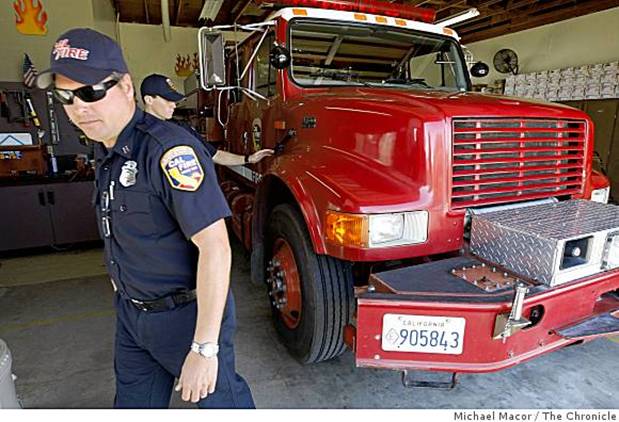
If
Defeat of the measures
on the May 19 ballot would chop nearly $6 billion in expected revenue from next
year’s budget, on top of a projected $8 billion deficit left by shrinking tax
collections. Proposals by Gov. Arnold Schwarzenegger and others to close that
gap are driving a wildfire of criticism across the state.
Deep cuts in school and
law enforcement budgets, billions of dollars less for local government and
slashes in state programs all will be on the table as legislators look for the
least painful alternatives.
“There are no good choices,” said Tim Gage, former state finance director under Gov. Gray Davis. “There are options, but they’re all really ugly.” …
29. “Small elite reaps millions in E.U. farm subsidies” (The International Herald Tribune, May 8, 2009); story citing JACK THURSTON (MPP 1999).
By Stephen Castle and Doreen Carvajal - International Herald Tribune
BRUSSELS -- The first glimpse of previously undisclosed data on European Union farm subsidies shows that the recipients of the largest beneficiaries—worth tens of millions of euros include an Italian bank in Milan, a French chicken giant and an Irish producer of Weight Watchers meals and Yorkshire pudding….
Under pressure from the
27-nation European Union, a total of 26 countries published the information,
some of them for the first time. Farmsubsidy.org,
a nonprofit group that campaigns for transparency in the reporting of
subsidies, compiled a list of the top recipients in 18 of those countries. The
group was unable to include data from nine countries for technical reasons.
The newly released data still leave many questions unanswered, in particular what practices the companies are being paid for.
It was not clear why the Italian bank, Itituto Centrale delle Banche Popolari Italiane, qualified for five separate payments, the largest one for 96 million. As with all of the listings, there was no information as to how the recipient qualified and whether the payment referred to land holdings or other subsidies. The Milan bank did not respond to messages requesting the information.
Jack Thurston, a co-founder of farmsubsidy.org, said the lack of information made it impossible to definitively interpret much of the data. “The problem,” he said, “is that we don’t know why this money was paid. The E.U.’s Common Agricultural Policy is made up of dozens of different schemes from export subsidies to citric acid processing grants to money for organic farming and income support.”
“Even after these disclosures we are none the wiser about the measure under which this money has been paid,” Mr. Thurston added….
30. “Cutting carbon may be costly - Obama to end oil tax breaks” (Washington Times, May 8, 2009); story citing SKIP HORVATH (MPP 1976); http://www.washingtontimes.com/news/2009/may/08/cutting-carbon-will-aid-savings/
By Tom LoBianco, The
Federal proposals to curb carbon emissions will cost American households an average of $1,600 a year, the chief budget analyst for Congress said Thursday.
Meanwhile, President Obama outlined a budget that would cull $26 billion in revenue by rolling back tax breaks for oil and natural gas producers….
The nation’s oil and gas producers said Mr. Obama’s proposals would result in higher gas prices and fewer jobs, both daunting prospects during the continued economic turmoil.
“This budget is bad news for American consumers and worse news for American jobs,” said R. Skip Horvath, president of the Natural Gas Supply Association. “People don’t appreciate how big the natural gas industry is in this country. Four million Americans depend on domestic natural gas for their livelihoods - both those who work directly in the industry as well those in secondary jobs, such as steel and concrete, and retail jobs.” …
31. “The Center for American Progress (CAP) holds a discussion on ‘Truth in Labeling: Transparency and Health Insurance’” (The Washington Daybook, May 8, 2009); event featuring KAREN POLLITZ (MPP 1982).
… PARTICIPANTS: Steve Finan, senior director of policy at the American Cancer Society Action Network; Nancy Metcalf, senior program editor at Consumer Reports/Consumer Reports on Health; Karen Pollitz, research professor at Georgetown University; and Judy Feder, senior fellow at CAP ….
32. “If budget measures fail, cities could pay” (San Francisco Chronicle, May 7, 2009); story citing NANI COLORETTI (MPP 1994); http://www.sfgate.com/cgi-bin/article.cgi?f=/c/a/2009/05/07/BAPC17FU69.DTL&type=newsbayarea
--Heather Knight, Chronicle Staff Writer
The likelihood that
It’s also likely to mean more serious budget problems for cities and counties under a new proposal by Gov. Arnold Schwarzenegger to borrow up to $2 billion in property taxes. While some political analysts call it just one of many scare tactics by the governor to persuade voters to approve the measures, it’s an all-too-real scenario to local officials grappling with their own budget crises.
In
The mayor’s budget office still has to find $123 million in cuts to reach the $438 million mark—and that’s without factoring in the state cuts.
“It’s like trying to lose that last 15 pounds of weight,” Nani Coloretti, the mayor’s budget director, told The Chronicle. “We’re gaining weight right now, and getting farther from our goal.” …
Coloretti said the timing will make things even tougher. Mayor Gavin Newsom must give his proposed budget to the Board of Supervisors by June 1, and printing the thick budget book alone takes at least a week. That means the mayor’s budget office could have just days to make the additional cuts for the new fiscal year that starts July 1.
Newsom has asked departments to come up with proposals to cut their budgets by 25 percent, and Coloretti said the mayor hasn’t rejected any of those ideas.
“A cut that looks very bad today might not look so bad on May 19,” Coloretti said….
33. “Critics unimpressed by Obama’s proposed budget cuts” (Knight Ridder Washington Bureau, May 7, 2009); story citing STAN COLLENDER (MPP 1976).
By David Lightman, McClatchy Newspapers
The administration’s book of cuts and terminations … [range] from ending production of the F-22 fighter jet, which costs about $3.5 billion a year, to eliminating “local government climate-change grants,” which the budget office said lack “focus” and which cost about $10 million….
“A lot of the programs we’re talking about are very small, but they are extremely important to a small number of people, who want to keep them in the budget,” [Robert Bixby, the executive director of the Concord Coalition, a nonpartisan budget watchdog group] said.
That means a lot of little fights in Congress that could cost time and goodwill that the administration needs for bigger battles.
Obama acknowledged that, saying: “Now, none of this will be easy. For every dollar we seek to save there will be those who have an interest in seeing it spent.”
So, are those 121 programs important enough to fight Congress over?
“We don’t know,” veteran Washington budget analyst Stan Collender said, “how hard they’re really going to fight for these spending cuts.”
34. “Swine flu goes person to pig; could it jump back?” (Lubbock Avalanche-Journal, May 4, 2009); newswire citing TIM UYEKI (MPP 1985/MD); http://www.lubbockonline.com/stories/050409/hea_436152394.shtml
By Margie Mason, ASSOCIATED PRESS
The never-before-seen virus was created when genes from pig, bird and human viruses mixed together inside a pig. Experts fear the virus could mutate further before crossing back into humans again. But no one can predict what will happen….
Canadian officials
announced Saturday that the virus had infected about 200 pigs on a farm—the
first evidence that it had jumped to another species. It was linked to a farmworker who recently returned from
Unlike the H5N1 bird flu virus, which infects the blood, organs and tissue of poultry, most swine flus are confined to the respiratory tract, meaning the risk of a human getting infected by a pig is “probably 10 or a 1,000 times less,” [Juan Lubroth, an animal health expert at the U.N. Food and Agriculture Organization] said.
But pigs are of special concern because they share some basic biological similarities with humans.
They also have served as “mixing vessels” in which various flu strains have swapped genetic material. That’s what happened to create the current swine flu strain….
There have been sporadic cases of pigs infecting humans with influenza in the past…
Dr. Tim Uyeki, an epidemiologist with the U.S. Centers for Disease Control and Prevention who has worked on SARS and bird flu outbreaks, said there may be more pig-to-human cases that have gone unnoticed because surveillance among swine populations tends to be weaker than among poultry stocks.
Given that the past three flu pandemics—the 1918 Spanish flu, the 1957-58 Asian flu and the Hong Kong flu of 1968-69—were all linked to birds, much of the global pandemic preparedness has focused on avian flus.
“The world has been watching and preparing and trying to prevent a pandemic from an avian influenza reservoir,” he said. “The focus has been on birds, and here is a virus that’s coming from a swine reservoir. Now it’s a human virus.”
35. “Obama urges more scientific research, as DOE pledges $777M for the cause” (Inside Energy with Federal Lands, May 4, 2009); story citing STAN COLLENDER (MPP 1976).
By Derek Sands
President Barack Obama made one of his strongest pitches to date last week to ramp up funding for basic scientific research, especially for new sources of clean energy and technologies to combat climate change.
In a speech at the
National Academy of Sciences in
The administration intends to spend $150 billion over ten years on energy efficiency and renewable energy, and double funding for DOE’s Office of Science, according to Obama.
[John] Holdren, Obama’s chief science adviser, said that while the current bump in research and development funding under the economic stimulus bill and the 2009 budget was a “down payment” on long-term increases in science funding, they still are working with Congress to ensure future funding….
Between funding in the economic stimulus package and the fiscal 2009 budget, DOE’s research and development funding will total $17 billion, a dramatic jump from the $9.8 billion in fiscal 2008.
But others at the [American Association for the Advancement of Science] forum warned that while research and development will see robust funding levels in fiscal 2009 and 2010, the money could drop off after that….
Stan Collender, a former staffer on the House and Senate Budget committees, also set a warning tone, predicting that as the economy recovered in the next two to three years, the large deficit spending currently tolerated would fall out of favor, and pressure to cut R&D funding would increase….
36. “S.F. City Hall split over solar project” (San Francisco Chronicle, May 3, 2009); story citing CARMEN CHU (MPP 2003); http://www.sfgate.com/cgi-bin/article.cgi?f=/c/a/2009/05/03/BA5D17CG6I.DTL
--Marisa Lagos, Chronicle Staff Writer

A groundbreaking project that would more than triple San Francisco’s solar energy portfolio has run into some unexpected bumps at the Board of Supervisors—delays that raise questions about whether the city will be able to lead the way in renewable energy development as officials have promised.
The solar project involves having a private company, city-based Recurrent Energy, build the state’s largest photovoltaic plant atop the city’s concrete-covered Sunset Reservoir. The panels would produce 5 megawatts, enough to power 1,500 homes. The partnership is designed, in part, to take advantage of federal incentives that will bring down the cost of the project, but the city will have to promise to pay at least $60.2 million over 25 years.
Some supervisors have balked at aspects of the project, which would be financed and built on public land with a guarantee that the city will buy the energy at a fixed rate. A vote on the contract, scheduled for April 28, was delayed until Tuesday because of the concerns.
At recent hearings, Supervisors Ross Mirkarimi and David Campos challenged whether the city is getting a good enough deal over the 25-year agreement. They also questioned a provision that takes away supervisors’ ability to annually review the large contract, especially because solar costs are expected to decline as technology improves and demand increases. Some public power advocates would like to see the private sector cut out of the process entirely.
Proponents of the deal—including the San Francisco Public Utilities Commission, Mayor Gavin Newsom and Supervisors Carmen Chu and Bevan Dufty—argue that the partnership is necessary because the city can’t finance a project of this magnitude and the private company is eligible for tax breaks that will dramatically bring down the cost of the project. Also, they say, the 25-year contract is needed for Recurrent to secure the $40 million to $45 million in financing needed for the initial investment….
37. “Using Up Benefits. Workers run to get treatments before they lose health insurance” (Press-Enterprise, May 3, 2009); story citing MARIAN MULKEY (MPP/MPH 1989).
By Jack Katzanek, The Press-Enterprise
Millions of Americans go to work each week knowing their medical costs are covered, at least in part, in the event of a major illness. But many of them also fear that their jobs could be gone in a month and their health insurance shortly after that.
That insecurity has made thousands of Inland Southern California workers and family members worried about their long-term health. Some medical offices in the region are reporting waits way longer than usual for appointments….
Doctors and other providers, and insurance companies, may also be on notice that this recession might lead to financial complications.
Marian Mulkey, senior program officer for the California Health Care Foundation, said unemployment and disappearing benefits have created “a very uncertain time” for the health care business, especially when illnesses related to stress are factored in.
“But it’s too early to be worried about the impact of more claims and fewer people buying in” on the insurance business, Mulkey said.
She’s more concerned with local providers—the clinics and doctors’ offices that could see fewer patients with the ability to pay.
“There’s a huge variable among the doctors and the clinics,” Mulkey said. “Some are on solid financial footing, and some are in tenuous condition. There are certain groups of health care providers that are just getting by in good times.”
38. “Official: Swine flu
in ‘declining phase’ in
By Associated Press
The death toll in
He said data suggest the epidemic peaked sometime between April 23 and April 28, and that drastic measures — closing the nation’s schools, shuttering most of its businesses and banning mass public gatherings — apparently have helped curb the flu’s spread.
In the
The
global caseload was nearing 800 and growing — the vast majority in
But just over a week into the outbreak, the virus largely remains an unpredictable mystery….
Scientists warn that the virus could mutate into a deadlier form.
“Influenza is
unpredictable,” said Dr. Tim Uyeki, an
epidemiologist at the
Right now, one of the
biggest hurdles is a lack of information from
39. “Broadband Caps: Is
A Meter Running While You Read This?” (Washington Post,
Fast Forward by Rob Pegoraro
…The post I did last month on the subject [of “usage-based billing”], noting Time Warner Cable’s shelving of its plans to sell metered Internet access, generated some interesting comments that got me thinking further….
But if you can make usage-based billing palatable, do you need to?
Providers of other Internet services have found it practical to get rid of consumption caps—consider, for example, the Web-mail services that no longer limit how many messages you can store, or the Web hosting plans that lack the traditional monthly bandwidth quota.
Derek Turner, research director at Free Press, a Washington-based lobby that advocates net-neutrality policies and opposes broadband caps, wrote in an e-mail that usage-based billing was neither “fair or efficient, because carriers themselves don’t pay for transport by the byte—they pay by the size of the dedicated line leased to transport data.” …
40. “Divorce victory for
girl aged 8 who was sold by father;
By Ruth Gledhill
An eight-year-old girl
in
The girl … was given to the older man in marriage by her father to pay off a debt….
Human rights groups in
In February King Abdullah appointed Norah al-Fayez as the Deputy Minister for Women’s Education, the first woman minister in the kingdom. It has also signed up to the UN Convention on the Rights of the Child….
41. “Royals and multinationals raking in EU farm aid” (EUobserver.com, May 1, 2009); story citing JACK THURSTON (MPP 1999).
By Andrew Rettman
In France, which alone scooped ¤10.4 billion of the pot, the Doux Group, which sells chicken products to over 130 countries worldwide, was the biggest single recipient on ¤62 million.
Major food companies
Nestle and Tate & Lyle were the largest
Farm aid transparency
was pioneered by a group of Danish investigative journalists who in 2004 forced
The EU law was pushed through by the office of EU anti-fraud commissioner Siim Kallas….
Farmsubsidy.org campaigner Jack Thurston has criticised the commission’s initiative, which leaves it up to the 27 EU states to manage their own data revelations, giving a patchy picture of the Common Agricultural Policy (CAP).
“We would have preferred central disclosure by the commission, which does hold all the data itself, but that was a battle we lost,” he said….
42. “The Role of Science
in Regulatory Reform” (Congressional Documents and Publications, April 30,
2009); U.S. Senate Science and Technology Subcommittee on Investigations and
Oversight Hearing, congressional testimony citing DAVID WEIMER (MPP 1975/PhD 1978), AIDAN VINING (MPP 1974/PhD 1980), and EUGENE BARDACH.
Testimony by Cary Coglianese, Associate Dean House, Edward B. Shils Professor of Law and Professor of Political Science,
University of Pennsylvania Law School
… In addition to
understanding the problem, regulatory decision making calls for a consideration
of solutions. n2 What are the possible ways the problem
might be solved (or at least the situation improved)? Against which criteria
ought alternative solutions be judged (including the
option of doing nothing)? How does each alternative fare when assessed against
the chosen criteria? On the basis of answers to these kinds of questions, the
regulator can make an informed decision about what ought to be done - namely,
whether to regulate and, if so, exactly how to do so….
n2 For treatments of
policy decision making, see David Weimer
and Aidan R. Vining,
Policy Analysis: Concepts and Practice (4th ed. 2004), and Eugene Bardach, A Practical Guide for
Policy Analysis: The Eightfold Path to More Effective Problem Solving (2008)….
43. “Fed
meeting likely to leave policy on hold as stability returns; Inflation Worry”
National Post’s Financial Post & FP Investing (
--Reuters
The meeting keys off economic forecasts by Fed staff and, thanks to signs of stability, it was unlikely these would have been lowered since the last FOMC gathering….
Policymakers will still have plenty to talk about, including their exit strategy to prevent inflation picking up in the future as an economic recovery gets underway, thanks to the powerful monetary stimulus the Fed has undertaken.
“The Fed is printing
high-powered money that is sloshing around, but because the monetary policy
channels are clogged ... in the near-term you have downward pressure on
inflation,” said Mickey Levy, chief
economist at Bank of
However, the economy is turning the corner and will start to pick up gradually in the second half of this year, at which point inflation will become a genuine threat.
“We run the risk of sharply higher inflation expectations and I think the market is giving the Fed a free pass. Tenyear yields are under 3%,” Mr. Levy told the Cato Institute in a presentation by the self-styled Shadow Open Market Committee on Friday.
44. “Smokers to pay surcharge” (The Associated Press State & Local Wire, April 28, 2009); newswire citing BRIAN HAILE (MPP 2000).
The Tennessean reports
state officials hope the surcharge will provide an incentive for employee
smokers to quit and save
To help smokers quit before the Jan. 1, 2010, deadline, the state will offer discounts on prescriptions and over-the-counter products like nicotine gum and patches starting May 1.
Employees will be also allowed to take part in six-week smoking cessation seminars on state time. The state held its first stop-smoking seminar Monday.
Brian Haile, deputy director for the state’s Division of Benefits Administration, which oversees coverage for some 270,000 adults and children covered by state employee health insurance said “having money on the line can give smokers the push they need to quit.”
“It’s been known to triple the effective quit rate if there’s an economic incentive for doing so,” Haile said.
It’s not yet known how much it will cost the state to help its workers and retirees kick the habit, but Haile estimated it could cost several hundred thousand dollars. The costs will be offset by the smoking surcharge, once the insurance change goes into effect….
45. “State Experiences with Health Reform” (Federal News Service, April 28, 2009); Hearing of The Senate Health, Education, Labor and Pensions Committee, testimony by RUTH LIU (MPP 1999).
Subject: Learning from
the States:
Chaired By: Senator Ted Kennedy (D-Ma);
Witnesses: Jon Kingsdale, Ph.D., Executive Director, Commonwealth Health
Insurance Connector Authority,
…SEN. BINGAMAN: … Ms.
Liu, you’re going to give us the word on what’s happening in
MS. LIU: … I did want to inform the Committee that at the time of
the
I think that we have
three key lessons to learn from the
The first is that in the
Second, we wrestled with issues around affordability, both affordability for purchasers of coverage and keeping the cost of the reform proposal affordable for the State. There are many lessons learned in terms of benefit design, subsidy design and shared responsibility that I think will translate well nationally.
And finally, I want to say that we spent considerable time and effort designing an approach that would allow us to transition as smoothly as possible from an underwritten, but fairly robust, individual market to a guaranteed issue market without health status rating that preserved comprehensive offerings….
46. “When Irish Mechantronic Backs Go Marching By...” (States News Service, April 22, 2009); newswire citing BILL HEDERMAN (MPP 1974) and SKIP HORVATH (MPP 1976)
NOTRE DAME,
However, even the most diehard fan is probably unaware that the Gold defeated the Blue 59-56 in another hotly contested football game that also took place on campus Saturday.
A total of 70 senior
mechanical engineering design students competed in Saturday’s first Fighting IBots Mechantronic Football
Competition at
The winning Gold squad received the Brain Hederman Memorial Robotic Competition Award. Hederman was a Notre Dame student who suffered an untimely death after his freshman year in 1995. The award plaque was inspired by a drawing he left behind.
The competition was sponsored by Bill Hederman, Brian’s father, and Vince Cushing and Skip Horvath, all members of the Notre Dame class of 1970.
The event was also supported by Clean Urban Energy, the American Society of Engineering Education and Notre Dame’s Department of Aerospace and Mechanical Engineering…..
47. “The George
Washington University’s Institute for Politics Democracy and the Internet holds
its 2009 Politics Online Conference, April 20-21” (The Washington Daybook,
April 20, 2009); event featuring JOHN
BROUGHTON (MPP 1984).
AGENDA… Highlights :
…
-- 11:30 a.m.: John Broughton, author of “Wikipedia: the
Missing Manual”; Andy Carvin, senior product
manager at National Public Radio; Amanda Michel, editor of distributed
reporting at ProPublica; Eric Odom, online politics
consultant; and Conor Kenny, senior editor at
OpenCongress.org, participate in a discussion on “Collaborative Politics
Online: Principles, Pitfalls and Practical Advice”…
48. “HSU Names Top Alumni
for 2009” (Targeted News Service, April 8, 2009); newswire citing RICHARD WINNIE (MPP 1971/JD 1975).
ARCATA,
An oceanographer, a
newspaper editor and an international counsel make up the trio of 2009
Currently Alameda County Counsel, Richard Winnie (‘69) has dealt with
complex regulatory problems from the local to international level for more than
30 years. His civic engagement spans his entire career, reaching back to
Each of this year’s
winners will take part in the Distinguished Alumni Speaker Series….
International
Governments and the Strategy of Decentralization will be the subject of Winnie’s remarks on Monday, April 20,
at
49. “Swimming pools not complying with federal law - City aquatics centers hurrying to implement drain covers that prevent auction-related injuries or drownings” (Contra Costa Times, March 31, 2009); story citing KEVIN SAFINE (MPP 1994).
Cities and other pool operators are scrambling to comply with a new federal law requiring installation of anti-entrapment drain covers in public swimming pools and spas—covers designed to prevent drownings and injuries related to drain suction.
The law became effective in December, but some local pool operators acknowledge they have been allowing swimmers into pools even though the new protections aren’t fully in place. Those pools, however, won’t face consequences for failing to comply with the law because county health inspectors aren’t enforcing it yet….
Although
They didn’t close the swimming pools when the law went into effect, he added, because they believed the entrapment risk was low since the pools had multiple, unblockable drains.
“It was felt that if we closed the pool, does that then pose a greater risk to the public who aren’t able to take swim lessons and aren’t able to swim?” Safine said….
50. “Young adults tell
of foster-care hardships - Solutions explored to help those who are aging out
of system” (Richmond Times-Dispatch, March 28, 2009); story citing First Place
for Youth, cofounded by AMY LEMLEY
(MPP 1998) and DEANNE PEARN (MPP 1998);
http://www.timesdispatch.com/rtd/news/local/article/HOME28_20090327-223143/242993/
By Zachary Reid,
Times-Dispatch Staff Writer
LaVon
Trevelle was quite succinct in summing up life in a
homeless shelter.
“It is rough,” she said
yesterday during the Greater Richmond Housing Summit: Youth Aging out of Foster
Care. “It is something you wouldn’t want your worst enemy to go to.”
Trevelle
was part of a daylong series of seminars and talks put together by the
University of Richmond and Faces of Virginia Families, a nonprofit group that
works on foster-care, adoption and other family life issues….
A panel of national
experts talked about successful programs in
Nationwide, the most
effective programs include intensive training and counseling in life skills and
positive interaction with adults, said the program directors on the panel.
“We know our youth are
not going to be able to move out without some assistance,” said Bonita
Campbell, director of independent living at Lighthouse Youth Services in
Sam Cobbs, executive director of First Place for Youth in Oakland [cofounded by Amy Lemley and Deanne Pearn],
agreed.
“It’s not like we’re
trying to fix our economy or reduce our dependence on foreign oil,” he said. “It’s
a very simple thing we’re trying to do.” …
51. “Castro Valley school district looks to resolve fencing issue” (The Daily Review, March 20, 2009); story citing RICHARD WINNIE (MPP 1971/JD 1975); http://www.insidebayarea.com/search/ci_11954604?IADID=Search-www.insidebayarea.com-www.insidebayarea.com
By Kristofer Noceda
The fencing had been a hot topic after residents complained to the Castro Valley Municipal Advisory Council about accessibility issues after school hours.
The council, in turn, ordered county staff members to look into the complaints and found that the fencing posed safety hazards to motorists….
School officials previously said districts must follow specific state standards for construction projects, and that local ordinances may not be applicable to a government agency such as a school district.
The council, however, was not too fond of the district’s position and at one point considered taking legal action if school officials refused to cooperate with their requests to resolve the school fencing issue.
Richard Winnie, county counsel, said at Monday’s MAC meeting that the issue was “not a lawyer matter.”
“The district made a mistake,” he said to the council. “It’s a simple issue that we would like to see them own up to the problems that exist.”
52. “Bay Area sewer, water projects to get federal stimulus funding” (San Mateo County Times, March 19, 2009); story citing KELLYX NELSON (MPP 2004); http://www.insidebayarea.com/search/ci_11951672?IADID=Search-www.insidebayarea.com-www.insidebayarea.com
By Julia Scott -
Cities with badly outdated sewer and water infrastructure saw a ray of hope in February when it became clear that federal stimulus funding for “shovel-ready” projects would include the sort of crucial water-based repairs that the public rarely thinks about and is reluctant to pay for.
Cities, wastewater agencies and special districts around the Bay Area rushed to pre-apply for federal grant funds that may become available to expand wastewater plants, implement water recycling programs, and replace old and leaky water mains, according to Ken August, a spokesman for the California Department of Public Health, which will distribute some of the federal money….
The department has
already received 2,274 project proposals with a total value of $6.8 billion,
but
The emphasis on “shovel-ready” jobs and on projects with environmental focus also bodes well for the San Mateo County Resource Conservation District, which saw many ongoing coastal restoration projects frozen last month and its budget slashed, resulting in severe staff cuts.
The agency has put in a
request to continue with an important
“This shovel-ready requirement is difficult to meet. I know a lot of people don’t have permits sitting around, waiting to complete a project,” said Kellyx Nelson, executive director of the San Mateo County Resource Conservation District….
1. “Minority students will reach for a higher bar” (San Francisco Chronicle, May 31, 2009); op-ed by DAVID KIRP; http://www.sfgate.com/cgi-bin/article.cgi?f=/c/a/2009/05/31/ING317S58S.DTL&type=printable
--David L. Kirp
Check out commencement photos from elite private universities like Harvard or Stanford, and you’ll see a considerable number of black and Latino graduates. Race-conscious admissions policies are the main reason.
A recent study finds that, at such schools, black and Hispanic students receive the equivalent of a 200 point edge in SAT scores. (Several states, including California, prohibit public universities from taking race into account, which is why just 3 percent of Berkeley students are African American—the same percentage as 30 years ago, when Berkeley started keeping racial statistics.)
Conservatives cry foul. Not only is affirmative action unfair to better-qualified white students, they argue, it’s also unfair to those “under-qualified” minority students. The “minority mismatch” argument goes like this: Nonwhites who wouldn’t otherwise be admitted to selective universities find themselves competing with better-prepared white students, and that’s a prescription for failure. They’d be better off at a school a rung or two down the prestige ladder.
But the research disproves this mismatch claim. Give minorities the chance to attend top-flight universities, the evidence shows, and they’ll actually do better. That’s not only good for them, it’s also good for the country….
Goodbye ideology, hello evidence? While it’s hard to persuade ideologues to confront inconvenient truths, this research should embolden defenders of affirmative action to challenge what then-President George W. Bush rightly denounced as the “soft bigotry of low expectations.” Race-conscious admissions is not, as the critics insist, a sop to political correctness. It’s smart human capital policy.
David L. Kirp is a professor of public policy at UC Berkeley and author of “Shakespeare, Einstein, and the Bottom Line: The Marketing of Higher Education.”
2. “Smart People: Dan Kammen, Professor, Energy and Resources Group, UC Berkeley” (Smart Planet, May 29, 2009); local climate solutions video featuring DAN KAMMEN; video link
 Dan Kammen
directs the renewable energy laboratory and the center for stable
transportation at UC Berkeley. His research focuses on greening our homes
and highways from both a science and public policy perspective. Kammen’s vision is to reduce the planet’s carbon emissions
by dramatic amounts over the coming decades by using smart technologies.
Dan Kammen
directs the renewable energy laboratory and the center for stable
transportation at UC Berkeley. His research focuses on greening our homes
and highways from both a science and public policy perspective. Kammen’s vision is to reduce the planet’s carbon emissions
by dramatic amounts over the coming decades by using smart technologies.
3. “An Attack on Preschool for All” (Washington Post, May 29, 2009); column citing DAVID KIRP; http://voices.washingtonpost.com/class-struggle/2009/05/an_attack_on_preschool_for_all.html
--Jay Mathews, Columnist
… [T]he question of what kind of preschool system is best for the nation has become so important that even I can’t avoid it. Politically, it is the most-mentioned item on the education agendas of our nation’s most ambitious political leaders. The president, Congress, numerous foundations and think tanks are working on it. There seems to be an emerging consensus that universal preschool is what we need, maybe.
... The leaders of the movement to expand preschool services are not going to like “Reroute the Preschool Juggernaut” by Chester E. Finn Jr., but its clarity and depth are hard to resist.
... The report puts the idea of universal preschool in an unflattering light, because Finn thinks we are headed in the wrong direction.
The problem, say the scholars cited by Finn, is that although good preschool teaching is important to preparing impoverished students for success in school, very few of the available preschools are very good, and the mediocre ones don’t add much value. On the policy level, Finn is particularly distressed by the widespread notion that we won’t get good preschools for poor kids unless we provide good preschools for all kids.
He quotes
To which Finn replies, “That’s nonsense.” He
says it’s obvious “that
I see what Finn is saying, but Kirp has a point. Social Security and Medicare are good examples of programs that work best for the poor, but would not have come into existence if there weren’t also some benefits for middle-class voters like me….
4. “Manufacturing Jobs Are Never Coming Back” – Commentary by ROBERT REICH (Forbes Magazine, May 28, 2009); http://www.forbes.com/2009/05/28/robert-reich-manufacturing-business-economy_print.html
Robert B. Reich
It doesn’t make sense for
Factory jobs are vanishing all over the world.
Even
What happened to manufacturing? In two words, higher productivity. As productivity rises,
employment falls because fewer people are needed. In this, manufacturing is
following the same trend as agriculture. A century ago, almost 30% of adult
Americans worked on a farm. Nowadays, fewer than 5% do. That doesn’t mean the
Any job that’s even slightly routine
is disappearing from the
Robert B. Reich, former U.S. Secretary of Labor, is professor of public policy at the
5. “Where recession can hurt clean energy” (Marketplace [NPR], May 28, 2009); features commentary by DAN KAMMEN; http://marketplace.publicradio.org/display/web/2009/05/28/am_/
Jim Bridger (coal) Power Plant
near

Sam Eaton: Global electricity use is expected to fall this year for the first time since World War II, according to a report out this week from the International Energy Agency. And that’s a good thing: as people use less energy, less CO2 reaches the atmosphere. But there’s a potential downside. The recession may pave the way for a dirtier future.
UC Berkeley energy policy expert Dan Kammen says tight credit has made investments in renewable energy less appealing.
DAN KAMMEN: During a down economic time, known investments—whether those are natural gas or coal—look much more attractive.
Even President Obama’s stimulus package may not
be enough to give clean energy a boost. Absent a mandatory cap on carbon
emissions of the kind now under debate in Congress, there’s less incentive for
investors to back renewables. That may help explain
why the
6. “Obama Calls on Berkeley School of Antitrust” (States News Service, May 28, 2009); newswire citing ROBERT REICH.
Their appointments appear to highlight the growing strength of the “Berkeley School of Antitrust Economics.” Its approach to antitrust analysis and policy is grounded in rigorous training in orthodox economic theories and modeling. But it is characterized by a willingness to look for new theories when others have reached their explanatory limits, close attention to empirical evidence and institutional details, and openness to modifying or rethinking existing economic models as new kinds of economic activity raise novel questions….
“Especially when the nation is in crisis and
expertise is so badly needed,
7. “Nation; Inside Politics” (The Washington Times, May 27, 2009); column citing ROBERT REICH; http://www.washingtontimes.com/news/2009/may/27/inside-politics-26211479/?page=2
By Greg Pierce, The
THE NEXT TAX
“During the presidential campaign, I thought Obama made only one big policy mistake. He criticized John McCain for proposing to tax all employer-provided health benefits,” Robert Reich writes at www.salon.com.
“McCain’s overall health plan was regressive—he
would have turned the savings into tax credits for purchasing health care—but
he was right about where the revenues should come from. I worried that Obama
would come to regret the position he took,” said Mr. Reich, who served as labor secretary in the
“Half a year later, it appears that the president will need to tax employer provided health benefits in order to finance universal health care. Or at least the tax-free benefits now enjoyed by higher-income employees. Many in Congress and in the White House are convinced it’s the only good option. Max Baucus, chair of Senate Finance, explicitly put it on the table last week. Peter Orszag, the president’s budget director, has told Congress the option should remain on the table.
“The White House is in a revenue bind. The
president had intended to raise money for health care by limiting the income
tax deductions that wealthy taxpayers can claim. This would have generated some
$318 billion over 10 years, about half of Obama’s proposed ‘health care reserve
fund.’ But the proposal ran into a buzz saw of opposition from congressional
Democrats. Not only did Baucus balk but so did Charles Rangel, chairman of the
“With deficit vultures already circling, Obama has to come up with a far more reliable way to fund health care. That’s where employee health benefits come in.” …
8. “Are Democrats giving away the store on health care reform?” (The Ed Show, MSNBC, May 27, 2009); interview with ROBERT REICH.
Ed SCHULTZ: … Well, first Senator Baucus took single payer off the table. Now Senator Schumer is pushing a compromise where any public plan would “adhere to private insurance rules?”
Now, I don’t want to prejudge this thing, but wasn’t it the whole point of a public option that it wouldn’t follow the for-profit rules that have gotten us in such bad situations with health care costs going up and bigger and bigger monthly payments all the time?
Now, if we don’t want to push back on this, we know that big pharma and big insurance companies are going to be just taking us to the woodshed. Are Democrats giving away the store on this? What’s this about a compromise?
Joining me now is Robert Reich, former secretary of labor and professor of public policy at UC Berkeley. His book, “Supercapitalism,” is available now in paperback.
Mr. Reich, tell us, where are the Democrats going wrong on this?
ROBERT REICH, FMR. LABOR SECRETARY: Well, Ed, there are compromises and then there are compromises. There are compromises that are giving away the store, and I hope I am wrong when I say this, but it looks as though at least Senate Democrats are about to take that public option off the able.
Now, remember, President Obama’s original idea was to have a system in which private insurance would still be able to compete for people’s dollars, but there would be that public option that would keep the private insurers honest and also would be able to use its bargaining leverage to get low prices from drug companies. So that was very important. If you take that public option off the table, well, you have a variation on the present system….
SCHULTZ: Now, what about the Democrats? Are they now thinking about taxing this benefit? What do you hear?
REICH: Well, yes, the Democrats are looking for ways to fund this new universal health care plan, Ed. And one of the … few places where there’s money left is in terms of actually taxing employer-provided health care, which is now free.
Now, the Democrats are not saying tax all of it. The Democrats are now beginning to say, well, why not tax the employer-provided health care that the rich get free, and that would provide enough money to provide universal health care for everybody?
SCHULTZ: Mr. Reich, I’ve said this for a long time, there’s a tsunami coming in small business in this country. And we know that next year, more small businesses are going to be eliminating the health care benefit as a benefit of the workplace.
Now, with that, how can they take the public option off the table? Because it seems to me there`s going to be a heck of a lot more people that are going to want to go into that.
REICH: Yes. Ed, look, the insurance companies, big pharma, they are putting enormous pressure right now on Congress, on the Senate, and their big campaign contributors. It is very important that people understand that public option is the centerpiece of the entire plan.
If it’s taken off the table, there is just not going to be any real cost saving. There’s not going to be really any opportunity for average Americans to get good deals with regard to health care….
9. “A fair plan to make college affordable” – Commentary by ROBERT REICH (Marketplace [NPR], May 22, 2009); Listen to this commentary
ROBERT REICH: The average young person now graduating from college has to repay almost $22,000 of student loans. That’s a record, partly because college costs have continued to rise even during the downturn, and because other sources of college funding have taken big hits—like home equity loans and 529 plans that allowed families to sock money away for college.
But how can a young people repay this much money when the job market is so bad? …
Even when they do find jobs, college grads have no choice but to take the job that pays the most. They can’t afford to do what they might really want to do—become, say, a social worker or writer or legal services attorney….
We need a new system. So here’s my proposal: Any college student can get full funding from the government, with only one string attached. Once they’ve graduated and are in the work force, they pay 10 percent of their incomes for the first 10 years of full-time work into the same government fund they drew on to finance their college education….
It’s fair, it’s simple, and good for society as well as the individual. So happy graduation!
Chiotakis: Robert Reich teaches public policy at the
10. “Op-Ed: California Academics Inject Substance into EFCA Debate” (California Progress Report, May 22, 2009); commentary citing ROBERT REICH; http://www.californiaprogressreport.com/2009/05/california_acad.html
By Andrea Buffa, UC
The Employee Free Choice Act, legislation to
reform
The business community’s campaign against EFCA
has not pulled any punches—the U.S. Chamber of Commerce representative claimed
that passage of the bill would amount to “Armageddon.” But recently a number of
The report was edited by John Logan, Research
Director at the UC Berkeley Center for Labor Research and Education, and its
authors hail from UC Berkeley, UC Davis,
In his introduction, Reich writes about how the Employee Free Choice Act could benefit
the
[Download the full report at http://laborcenter.berkeley.edu/laborlaw/efca09.pdf ]
11. “California Voters Go to Polls on Budget Propositions” (PBS Newshour, May 19, 2009); features interview with JOHN ELLWOOD; http://www.pbs.org/newshour/bb/politics/jan-june09/ca_budget_05-19.html
 … SPENCER
MICHELS: In the week before the election, [Gov. Arnold Schwarzenegger]
threatened to sell off state-owned landmarks… all to raise money. He is
proclaiming he will release nearly 40,000 inmates from state prisons, including
illegal immigrants. He intends to fire 5,000 state workers, reduce the school
year up to seven-and-a-half days, lay off teachers, and cut support for
colleges.
… SPENCER
MICHELS: In the week before the election, [Gov. Arnold Schwarzenegger]
threatened to sell off state-owned landmarks… all to raise money. He is
proclaiming he will release nearly 40,000 inmates from state prisons, including
illegal immigrants. He intends to fire 5,000 state workers, reduce the school
year up to seven-and-a-half days, lay off teachers, and cut support for
colleges.
University
of
JOHN
ELLWOOD,
SPENCER MICHELS: Despite his star status, the
Republican governor wasn’t prepared for members of his own party to vote
against his budget. In
JOHN
ELLWOOD: What happens in
12. “In
By Steve Lohr
A123 Systems, a start-up, makes
lithium-ion batteries and wants to build more car-battery plants. (Larry Downing/Reuters)

President Obama has cast himself as a reluctant
interventionist in two of the nation’s major industries, Wall Street and
Even so, the scale of the government investment
and control — especially by the auto task force now vetting plans at Chrysler
and General Motors — points to an approach that has been shunned by the
Industrial policy refers to government programs tailored for a specific industry instead of actions whose effects are felt across an economy, like monetary policy or tax rates.
Mr. Obama’s declaration on Tuesday of tougher
rules on automobile emissions and mileage standards is both an environmental
and an industrial policy. The new national standards require carmakers to
produce fleets that are 40 percent cleaner and more fuel efficient by 2016. In
the
Today, economists, along with public policy and
In contracting businesses, industrial policy
suggests an active role for government in softening the effects for displaced
workers and affected communities. “To me, the strongest argument for industrial
policy was always easing the pain and smoothing the adjustment,” said Robert B. Reich, a professor at the
Mr. Reich,
a labor secretary in the
13. “Budget Bind; Budget Mess” (World News with
Charles Gibson, ABC News, May 19, 2009); features commentary by JOHN ELLWOOD.
CHARLES GIBSON (ABC NEWS): … In
LAURA MARQUEZ (ABC NEWS): … Coast to coast state governments are swimming in red ink, overwhelmed by the tanking economy.
Here in
PROFESSOR
JOHN ELLWOOD (PUBLIC POLICY):
14. “Real medical reform: Gravely ill. ‘Single-payer’ isn’t mentioned anymore, and now even Obama’s Medicare-like public insurance initiative looks unlikely” (Salon.com, May 18, 2009); commentary by ROBERT REICH; http://www.salon.com/opinion/feature/2009/05/18/public_insurance/
By Robert Reich
… Many experts have long agreed that a so-called single-payer plan is the ideal, because competition among private insurers who pay healthcare bills inevitably causes them to spend big bucks trying to find and market policies to healthy and younger people at relatively low risk of health problems while avoiding sicker and older people with higher risks (and rejecting those with preexisting conditions altogether), and also contesting and litigating many claims. A single payer saves all this money and focuses on caring for sick people and preventing the healthy from becoming sick. The other advantage of a single payer is it can use its vast bargaining power to negotiate lower prices from pharmaceutical companies, hospitals and suppliers….
On the campaign trail, Barack Obama pushed a compromise—a universal health plan that would include a “public insurance option” resembling Medicare, which individual members of the public and their families could choose if they wished. This Medicare-like option would at least be able to negotiate low rates and impose some discipline on private insurers.
But now the Medicare-like option is being taken off the table. Insurance and drug companies have thrown their weight around the Senate. And, sadly, the White House—eager to get a bill enacted in 2009 rather than risk it during the midterm election year of 2010—is signaling it’s open to other approaches….
Robert
Reich, a professor of public policy at the University of California at Berkeley,
was secretary of labor during the
15. “Blue-Ribbon Search for The Bottom” (The Washington Post, May 16, 2009); column citing ROBERT REICH; http://voices.washingtonpost.com/local-address/2009/05/live_blogging_todays_realtors.html
--Elizabeth Razzi - Local Address, The Washington Post’s real estate blog. …
9:39 a.m.: Robert
Reich, the labor secretary during the
Home prices are not going to return to 2006 levels for a long time, and the economy is not going to return to the levels seen between 2002 and 2007, he said. “That economy was built on a huge volume of unsustainable debt.”
“Median incomes are not rising, even when we get jobs back,” Reich said. Controlling health-care costs can help put money in consumers’ pockets for other purchases—like homes….
16. “How the state budget deficit started” (KGO TV, May 14, 2009); features commentary by JOHN ELLWOOD; http://abclocal.go.com/kgo/story?section=news/politics&id=6814183
By Mark Matthews
… Back in the late 1990’s, during the dot-com bubble when the state was awash in money, so much money politicians thought they could increase spending and hand out tax breaks.
At the height of the dot-com boom Governor Grey
Davis said
“They put it into healthcare programs and most
importantly they put it into education programs to reduce the class size in
Cain says the legislature also agreed to a tax cut dramatically reducing the state’s vehicle license fee. Those two acts are significant says Cain because when the dot-com bubble burst, the additional teachers still had to be paid.
PROFESSOR JOHN ELLWOOD, PH.D. FROM U.C. BERKELEY’S GOLDMAN SCHOOL, is a policy analyst specializing in public budgets. He says Governor Davis knew he was in trouble, tried to reinstate the car tax, and touched off a rebellion.
“A whole series of radio shows, morning radio shows, where the D.J.’s talking to people trying to get to work in their cars went ranting and raving on the evils of the car tax,” says Ellwood.
In 1994, Californians voted for three strikes and the prison population boomed.
Part of the rise in medical expenses is due to an aging population, but voters also mandated more money for health care and education.
“Voters basically get what they want,” says Ellwood.
Professor
Ellwood says the problem is voters don’t always feel they should pay for
what they want and lawmakers in
17. “The truth about Social Security and Medicare. Social Security is a tiny problem, but Medicare is entirely different. It’s a monster” (Salon.com, May 13, 2009); commentary by ROBERT REICH; http://www.salon.com/opinion/feature/2009/05/13/reich/
By Robert
Reich
What are we to make of yesterday’s report from the trustees of the Social Security and Medicare trust funds that Social Security will run out of assets in 2037, four years sooner than previously forecast, and Medicare’s hospital fund will be exhausted by 2017, two years earlier than predicted a year ago? …
Don’t be confused by these alarms from the Social Security and Medicare trustees. Social Security is a tiny problem. Medicare is a terrible one, but the problem is not really Medicare; it’s quickly rising health-care costs. Look more closely and the real problem isn’t even health-care costs; it’s a system that pushes up costs by rewarding inefficiency, causing unbelievable waste, pushing over-medication, providing inadequate prevention, over-using emergency rooms because many uninsured people can’t afford regular doctor checkups, and spending billions on advertising and marketing seeking to enroll healthy people and avoid sick ones.
Robert
Reich, a professor of public policy at the University of California at Berkeley,
was secretary of labor during the
18. “Legalize pot? Advocates thrilled with change in polls, governor’s call for debate” (Contra Costa Times, May 13, 2009); story citing ROBERT MACCOUN; http://www.contracostatimes.com/search/ci_12353484?IADID=Search-www.contracostatimes.com-www.contracostatimes.com
By John Simerman
Richard Lee, founder of

In the backroom of Coffeeshop Blue Sky, a dispensary on 17th Street, mention of Gov. Arnold Schwarzenegger’s statement last week that “it’s time for debate” about legalizing pot drew a wide smile from Air Force veteran Rosanne Rutherford, who sat waiting to plunk down $22 for some “Blue Dream” in a brown paper bag….
.... A Field Poll in April found 56 percent of
Advocates and scholars see several factors converging, the largest being the economy and a desperate hunt for new revenue. A political shift with the Obama administration may play a role, and the fact voters are more apt to have smoked weed, along, perhaps, with a growing sense of futility in the war on marijuana and the cost in lives along the Mexican border.
“I’ve never seen a ... phone survey that showed more than half of adults favoring legalization. I’ve certainly never seen a governor putting forth the idea of debating the issue, much less an actual bill,” said Robert MacCoun, a UC Berkeley public policy professor. “It’s a comfort zone for politicians we didn’t have 10 years ago.”
Another possible factor: a public sense that Prop. 215, which legalized medicinal marijuana use in 1996, has caused few major problems, despite local battles over pot clubs, bad actors and high-profile dispensary raids….
Advocates say they hope for an ear from the Obama administration, which has signaled it has no plans to go after pot clubs in states with medicinal marijuana laws. But a campaign for legalization would be different, MacCoun said. “The Obama administration has no interest in fighting this battle, but if forced to, they will,” he said….
19. “Obama Adviser Sees Unemployment Rising Until 2010” (The New York Times, May 11, 2009); story citing ROBERT REICH.
By Joshua Brustein
President Obama’s chief economics forecaster said on Sunday that the nation’s unemployment rate was likely to keep rising until 2010, even if the economy begins growing later this year.
Speaking on C-SPAN, Christina Romer, chairwoman of the White House Council of Economic Advisers, said that she expected the economy to begin growing in the fourth quarter of this year. Ben S. Bernanke, the Federal Reserve chairman, made a similar prediction last week.
But Ms. Romer also said that she expected unemployment to rise even after the economy turns, saying that gross domestic product has to grow at a rate of about 2.5 percent before unemployment will fall. Before that happens, she said, it is ‘‘unfortunately pretty realistic’’ that the unemployment rate could reach 9.5 percent. It was reasonable to estimate that the G.D.P.’s growth rate in 2010 would be 3 percent, she said.
Robert Reich, who served as labor secretary under President Bill Clinton and advised the Obama campaign, said on Sunday that the rate of growth would have to be higher—4.5 percent—to reverse rising unemployment.
‘‘I think that when we talk about—or anybody talks about—hitting bottom, what we really have to understand is that the bottom is a kind of an undefined concept here,’’ he said on ABC’s ‘‘This Week.’’ …
20. “Roundtable: Economic mending?” (This Week with George Stephanopoulos, ABC News, May 10, 2009); features commentary by ROBERT REICH.
GEORGE WILL: On the one hand, it’s difficult to
stop the American people from creating wealth. We’re an industrious people with
a continental market. On the other hand, the President submitted a budget this
week that has $1.2 trillion of new debt. Now, that’s borrowing that has to come
from somewhere. And a lot of it is going to come from domestic capital because
we can’t count on our allies to continue buying our debt as they have in the
past. And the question is whether this will crowd out private capital
investment, crowding it out will lead to inflation and nip the recovery such as
it is in the bud….
ROBERT
REICH: Well the answer right now is that we don’t have to worry about that
because we have so much underutilized capacity. One out of ten Americans who
are either unemployed or just give up, have given up looking for work that we
do need to spend. The government is the spender of last resort. Now,
eventually, two years from now, three years from now we are going to have to
worry about, you know, possible inflation, and the Fed is probably going to
have to pull in its horns but right now is not a time the government ought to
worry about those kinds of things….
21. “Sounds Great, But What Does He Really Mean?” (The Washington Post, May 10, 2009); analysis citing ROBERT REICH; http://www.washingtonpost.com/wp-dyn/content/article/2009/05/08/AR2009050801864.html
By Alec MacGillis
Last week, President Obama told Sen. Orrin Hatch, the veteran Utah Republican, that he would appoint a “pragmatist, not a radical,” to replace retiring Supreme Court Justice David Souter.
The assurance was hardly necessary. After all, everything Obama does is pragmatic….
... But what does it mean, really, to have a “pragmatic” president? …
Pragmatism has distinguished roots. William James and John Dewey promoted it as a philosophy that elevated knowledge gained through action over theory and concepts. Obama has been pragmatic in this sense when it comes to, say, the financial crisis, embracing trial and error and resisting the more systemic solution of nationalizing banks. But pragmatism fails as a political definition, says Robert Reich, who served as President Clinton’s labor secretary, because it describes how a politician moves toward a goal, not the goal itself.
“It’s possible to be ruthlessly pragmatic in terms of how you get to an objective,” Reich said, “but the phrase is nonsensical in terms of picking an objective.” …
To hear Obama tell it, his platform is non-ideological because any thinking American that shares basic values of fairness and decency would see that it is right. In this regard, the president shares a skill with Ronald Reagan, who cast a conservative program in mainstream terms. That skill, Reich says, is enormously valuable—as long as Obama uses it to move the public toward his desired end.
“Most presidents who were change agents … described themselves as centrists but clearly had a collection of values about what was good and right,” Reich said. “The question becomes one of how much you reveal about where you want to lead people.” …
22. “Under Restructuring, GM to Build More Cars
Overseas” (Washington Post, May 8, 2009); story citing ROBERT REICH; http://www.washingtonpost.com/wp-dyn/content/article/2009/05/07/AR2009050704336.html
By Peter Whoriskey -
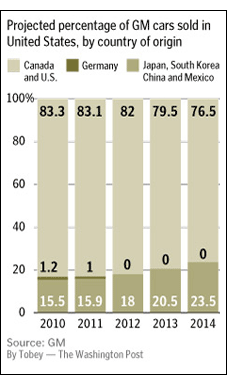 The
The
Essentially in control of the company, the
president’s autos task force faces an awkward choice: It can either require
General Motors to keep more jobs at home, potentially raising labor costs at a
company already beset with financial woes, or it can risk political fury by
allowing the automaker to expand operations at lower-cost manufacturing
locations.
“It’s an almost impossible dilemma,” said former
labor secretary Robert B. Reich, now a
professor at the University of California-Berkeley. “GM is a global
company—so for that matter is AIG and the biggest Wall Street banks. That means
that bailing them out doesn’t necessarily redound to the benefit of the
“More significantly, it raises fundamental
questions about the purpose of bailing out these big companies. If GM is going
to do more of its production overseas, then why exactly are we saving GM?” …
23. “Study:
Reported by Richard Harris
… Elliot Campbell at University of
California-Merced and his colleagues set out to answer the question: What is
the best way to use green plants to power cars?
They compared converting biomass to ethanol to simply burning plant
material, any plant material, to make electricity for vehicles. The results weren’t even close…. Making
electricity for vehicles is 80% more efficient.
That conclusion is no surprise to Dan Kammen at the
University of California at Berkeley who has studied this topic
extensively.
DAN KAMMEN
(UC-Berkeley): There are real
benefits of not making liquid fuels at all.
That process takes a lot of energy and internal
combustion engines are very inefficient when they burn the fuel. Electricity is a much better option, he says….
24. “EPA’s New Biofuel Regs Could Curtail Industry” (Weekend Edition Sunday, NPR,
May 10, 2009); features commentary by DAN
KAMMEN; Listen to
this story
by Richard Harris
Like at this ethanol plant
in

Getting fuel from green plants seems like a great
idea. But scientific research over the last few years shows that biofuels aren’t necessarily helpful in combating global
warming. Based on this data, the EPA has drafted new, tighter regulations that
could make it harder for the biofuels industry to
grow….
In fact, the EPA’s new regulations would let
existing ethanol plants keep operating, regardless of the climate impact.
It’s new plants that
face an uncertain fate. That’s partly because the biofuels
industry economics have turned sour. But it’s also because of the science that
led the EPA to draft the tough rules it recently announced….
“What I think this means for the industry,” says Dan Kammen at the
University of California Berkeley, “is you need to innovate. And there are pathways
that look very much more attractive than others.”
Kammen says, for starters, it might make sense to rethink
the best way to get energy out of green plants. A study in the latest Science magazine, for instance, suggests
that liquid fuels like ethanol aren’t the best way to go. Better to burn the
material to make electricity.
“Taking a biofuel and
making electricity from it can be done relatively efficiently,” Kammen notes. “And
then the benefit, of course, if your car is running on electricity, you use an
electric motor to drive the wheels, and that’s very efficient.” …
25. “Biofuels vs.
Biomass Electricity. Findings show that turning biomass into electricity is
more beneficial than turning it into transportation fuels” (Technology Review,
May 8, 2009); story citing model developed by DAN KAMMEN, MICHAEL O’HARE,
BRIAN TURNER (MPP 2006); http://www.technologyreview.com/energy/22628/
By Tyler Hamilton
Credit: USDA (switchgrass in the foreground); US Dept. of Energy (tower)

A study published today in Science concludes that, on average, using biomass to produce
electricity is 80 percent more efficient than transforming the biomass into biofuel. In addition, the electricity option would be twice
as effective at reducing greenhouse-gas emissions. The results imply that
investment in an ethanol infrastructure, even if based on more efficient
cellulosic processes, may prove misguided. The study was done by a collaboration between researchers at
There’s also the potential, according to the study,
of capturing and storing the carbon dioxide emissions from power plants that
use switchgrass, wood chips, and other biomass
materials as fuel—an option that doesn’t exist for burning ethanol. Biomass,
even though it releases CO2 when burned, overall produces less carbon dioxide
than do fossil fuels because plants grown to replenish the resource are assumed
to reabsorb those emissions. Capture those combustion emissions instead and
sequester them underground, and it would “result in a carbon-negative energy
source that removes CO2 from the atmosphere,” according to the study.
The researchers based their findings on scenarios
developed under the Biofuel Analysis Meta-Model
(EBAMM) created at the
26. “We own the banks. Now what do we do with
them? As the majority shareholders in failing banks, the American public should
push management to cut executive compensation and make more loans to Main
Street” (Salon.com, May 8, 2009); commentary by ROBERT REICH; http://www.salon.com/opinion/feature/2009/05/08/reich/
By Robert
Reich
The outcome of the “stress tests” will be that
the banks needing extra capital will get it from the Treasury. But where will
the money come from, now that the TARP fund is almost exhausted and Congress is
dead set against providing more bank bailout money? The Treasury will simply
swap debt for equity -- turning what the banks owe the government into shares
of stock in the banks. Presto. Ailing banks will get
more capital, and Tim Geithner won’t have to go back
to Congress to ask for it.
But by this sleight-of-hand, the public takes on
more risk. Much of the money we originally gave Wall Street took the form of
senior debt. We were preferred creditors, meaning that in the event of
bankruptcy (or some form of it) we’d get repaid first. But as shareholders, we’d
get nothing. As we’ve seen time and again during this economic crisis, shareholders
lose big.
It’s possible, of
course, that this is the perfect time to get shares in major Wall Street banks,
because the economy is poised for recovery. But it’s just as possible this is
the worst time -- especially in banks judged by the Treasury to be inadequately
capitalized -- because nonperforming loans keep mounting....
Robert
Reich, a professor of public policy at the University of California at Berkeley,
was secretary of labor during the
27. “Mentoring is its own
reward…but plaques are nice, too. The Grad Division and the Graduate Assembly
team up to honor GSIs and the faculty who guide them” (Berkeleyan,
By Dick Cortén,
Graduate Division
Robert Reich, professor
of pubic policy, holds aloft the certificate he received for his mentorship
of graduate-student instructors.

A week later, a new round of faculty mentoring
awards began with “ambush” presentations to Gordon Silverstein, professor of
political science, and Robert Reich,
professor of public policy…. A “prize patrol” consisting of representatives
from the Academic Senate’s Graduate Council and the Graduate Division’s GSI
Teaching and
Both were nominated by their graduate-student
instructors for the Faculty Award for Outstanding Mentorship of GSIs…. Nearly speechless with surprise, Silverstein and Reich were separately, and roundly,
applauded by their throngs of students. Then each, using virtually the same
words, said, “Where were we?” and resumed his lecture….
“Has Capitalism Failed?” (On Point with Tom Ashbrook, WBUR & NPR,
Richard Posner joins us from
Robert
Reich joins us from
28. “Do Plug-in Hybrids Fight Global Warming?
They do, according to a recent
By Robert Gammon
 Many
environmentalists believe that plug-in hybrid cars could be an effective tool
in the fight against global warming. Plug-ins have the potential to lower
greenhouse gas emissions because they run partly on electricity and thus get
much better gas mileage than traditional hybrid vehicles. But some critics note
that plug-ins aren’t all that eco-conscious. They use
electricity, after all, and many
Many
environmentalists believe that plug-in hybrid cars could be an effective tool
in the fight against global warming. Plug-ins have the potential to lower
greenhouse gas emissions because they run partly on electricity and thus get
much better gas mileage than traditional hybrid vehicles. But some critics note
that plug-ins aren’t all that eco-conscious. They use
electricity, after all, and many
One of the more recent studies,
conducted by UC Berkeley researchers [including
Dan Kammen]
and published by the Brookings Institution, shows that plug-in hybrids can
decrease greenhouse gas emissions in
As the use of renewable energy sources rises, the effectiveness of plug-ins will rise with them. According to the UC Berkeley study, a plug-in powered by renewable energy produces 99 percent fewer greenhouse gases than both a conventional car and a traditional hybrid….
[Daniel M. Kammen, Derek M. Lemoine, Samuel M. Arons and
Holmes Hummel. Evaluating
the Cost-Effectiveness of Greenhouse Gas Emission Reductions from Deploying
Plug-in Hybrid Electric Vehicles. Brookings-Google Plug-in Hybrid
29. “Debate over global warming plan heats up
By Tracy Seipel
After two years of public outreach and debate on an ambitious and controversial plan to curb global warming, Berkeley’s city council this week was forced to water down the proposal — which initially required an energy audit of every home — after angry homeowners complained the plan could cost them tens of thousands of dollars.
Experts say
“I think we can expect to see episodes like the controversy over mandates in the plan more and more, because environmental and political leaders haven’t been responsible about the costs of climate stabilization,” said Michael O’Hare, professor of public policy at the University of California-Berkeley. ‘‘If you don’t level with the public about the first part, it’s not surprising when people balk at climate policy that requires them to do some heavy lifting.”…
30. “Obama, the enemy of economic inequality. The
“ruthless pragmatist” is actually passionate about a central moral issue of
modern American life—the lopsided distribution of political and economic power”
(Salon.com,
By Robert Reich
 I
keep hearing the White House staff describe the President as a pragmatist.
David Axelrod, one of his chief advisors whom I admire enormously, recently
called him a “ruthless pragmatist.” Soon, I expect, he’ll be called a “take-no-prisoners
pragmatist,” or perhaps a “remorseless, merciless, and unrelenting pragmatist.”
I
keep hearing the White House staff describe the President as a pragmatist.
David Axelrod, one of his chief advisors whom I admire enormously, recently
called him a “ruthless pragmatist.” Soon, I expect, he’ll be called a “take-no-prisoners
pragmatist,” or perhaps a “remorseless, merciless, and unrelenting pragmatist.”
I’m relieved the President is a pragmatist, but that doesn’t let him or anyone around him off the hook for describing what he wants to achieve and why. Being a pragmatist is a statement about means, not ends. It describes someone who chooses the most practical way of achieving a certain goal but it does not explain why he chooses one goal over another.
The President seems to me especially thoughtful and passionate about one of the great moral questions of domestic policy today: widening inequality of income and wealth, and therefore of opportunity and political power….
To call his stance “pragmatic” is to rob it of its moral authority….
Robert Reich, a professor of public policy
at the University of California at Berkeley, was secretary of labor during the
31. “Go after tax havens to help health care” – Commentary by ROBERT REICH (Marketplace [NPR], May 6, 2009); Listen to this Commentary
ROBERT REICH: Why is President Obama taking aim at corporations that use foreign tax shelters when some think he should keep his powder dry for the much bigger fight coming up over universal health care?
Because the two are related. Originally the White House planned to pay for health care by limiting tax deductions for wealthier Americans. That would have brought in $318 billion over 10 years, half of the president’s proposed “health care reserve fund.” But the Democratic leadership nixed that revenue source. So now the White House is scrounging for money elsewhere.
Foreign tax shelters are an obvious place to
look. According to government reports, 83 of the 100 largest publicly-held
companies are evading
But the administration is not proposing to force
companies to bring sheltered money home and pay taxes on it. Its proposal is
merely to stop them from deducting the expenses of the shelters from the
RYSSDAL: Robert
Reich is a professor of public policy at the
32. “Is Company Cost-Cutting Company Throat-Slitting?” (TECHWEB, May 6, 2009); story citing ROBERT REICH.
CHICAGO/NEW YORK - In recent weeks, a number of investors and economists have declared the recession all but over based on a handful of seemingly positive signs, including a flurry of better-than-expected earnings from U.S. companies.
They may be getting ahead of themselves….
Analysts and investors argue that while job, cap ex and R&D cuts may shore up individual profits temporarily, they are bad news in the aggregate. They swell the ranks of the unemployed, reduce the wages of those who keep their jobs, and hurt an already struggling economy by further crimping consumer and corporate spending.
And that will only ricochet back on the companies themselves, reducing demand for their products and services and putting additional pressure on their sales and margins.
“As corporations cut payrolls and deleverage they
are acting perfectly rationally,” said Robert
Reich, the former U.S. Labor Secretary under President Bill Clinton who now
teaches at the
“But if that’s what every corporation does, we’re going to end up with far more job losses and in a deeper economic hole. Who’s going to be left to buy all the goods and services these companies produce?” …
Simply put, consumers are now saving when the economy really needs them to spend and businesses are now relentlessly firing and cutting costs when the economy really needs them to be hiring.
The result, according to Keynes: declining incomes across the board.
Which is why Reich believes President Barack Obama’s stimulus plan, which injects $787 billion into the economy over two years through tax cuts and spending, does not go far enough and may need to be expanded.
“In this environment, the government has to step in as the spender of last resort,” he said.
33. “Where Did All the Doctors Go?” (New York
Times,
Obama administration officials are right to be
concerned about shortages of primary care doctors. We have known about this
problem for 30 years — and could learn a lesson from
In the
Sounds like a plan to me.
Richard M.
Scheffler
The writer is a professor of health economics at the University of California, Berkeley.
34. “After the Great Recession” (New York Times Sunday Magazine, May 3, 2009); interview with The President citing ROBERT REICH; http://www.nytimes.com/2009/05/03/magazine/03Obama-t.html?pagewanted=4&_r=1
Interview by David Leonhardt - economics columnist for The Times and a staff writer for the magazine
Nadav Kander for The New York Times
 D.L.:
… I want to talk broadly about policy. When you and I spoke during the
campaign, you made it clear that you had thought a lot about the economic
debates within the
D.L.:
… I want to talk broadly about policy. When you and I spoke during the
campaign, you made it clear that you had thought a lot about the economic
debates within the
THE PRESIDENT: … When I first started having a
round table of economic advisers, and Bob
Reich was part of that, and he was sitting across the table from Bob Rubin
and others, what you discovered was that some of the rifts that had existed
back in the
D.L.: They agree a lot more than they used to, but not entirely.
THE PRESIDENT: Not entirely. But, I mean, the fact is that Larry Summers right now is very comfortable making arguments, often quite passionately, that Bob Reich used to be making when he was in the Clinton White House. Now Larry might not like me saying that —
D.L.: Larry Summers is the new Bob Reich —
THE PRESIDENT: — that he’s become a soft touch. But, no, I think that one of the things that we all agree to is that the touchstone for economic policy is, does it allow the average American to find good employment and see their incomes rise; that we can’t just look at things in the aggregate, we do want to grow the pie, but we want to make sure that prosperity is spread across the spectrum of regions and occupations and genders and races; and that economic policy should focus on growing the pie, but it also has to make sure that everybody has got opportunity in that system….
35. “Economix Blog: Robert Reich on Power” (New York Times Online, April 30, 2009); blog citing ROBERT REICH; http://economix.blogs.nytimes.com/2009/04/30/robert-reich-on-power/
By David Leonhardt
I received a thought-provoking e-mail message
from Robert Reich, who served as
labor secretary under President Bill Clinton, advised the Obama campaign and teaches at the
Neither he nor you
mentioned power — how concentrated it has become in our society as income and
wealth have concentrated; how much of it is in the hands of Wall Street, big
corporations, and their lobbyists; and how difficult it will be for him to do
the things he wants to do (e.g. raise revenues for universal health insurance,
regulate Wall Street, etc.) given this concentration. When you asked him about
separating commercial from investment banking once again, he expressed
confidence in strong regulation, and referred to
[This blog also appeared in the International Herald Tribune Online]
36. “Jewish Sports Hall of Fame of
Jewish Sports Hall of Fame: Adrea Brier (from left), inductee Richard Goldman and Debbie Findling.

The Jewish Sports Hall of Fame of
[More info on JSHOFNC.
37. “Getting Smarter About IQ” (The American Prospect, May 1, 2009); book review and commentary by DAVID KIRP; http://www.prospect.org/cs/articles?article=getting_smarter_about_iq
David L. Kirp
Intelligence and How to Get It: Why Schools and Cultures Count by Richard E. Nisbett, W.W. Norton, 304 pages, $26.95
All hell broke loose 40 years ago when Arthur
Jensen’s 120-page article, “How Much Can We Boost I.Q. and Scholastic
Achievement?”, appeared in the Harvard Educational Review. Critics accused Jensen of racism and
worse; noisy protests erupted at
... A quarter-century later, Richard J.
Herrnstein and Charles Murray recycled the same arguments in The
Although there have been many responses to Herrnstein
and
The legacy of the hereditarians—the belief, still prevalent in some circles, that the racial and class gaps in IQ and educational achievement are inherited and unchangeable—has allowed many Americans to rationalize the miserable conditions that many poor children face. There’s no excuse for that indifference now. The evidence is in, and if we want to close those gaps, Nisbett’s book shows us what we can do.
David L. Kirp is a professor of Goldman School of Public Policy at the University of California, Berkeley, and a frequent contributor to the Prospect.
38. “The verdict: Commentators give early backing”
(The Guardian (
Robert
Reich,
Obama is the serene centre of the cyclone—exuding calm when most Americans are petrified about paying the monthly bills. But 65% of Americans think highly of him. By almost any measure, his presidency so far has been a triumph.
May 22 ROBERT REICH was a featured guest discussing “Social class in the economic downturn” on The Oprah Winfrey Show.
May 22 ROBERT REICH addressed Undergraduate and Interdisciplinary Students graduates at their UC Berkeley Commencement.
May 27 JANE MAULDON discussed “the increasing number of multiracial Americans” on KCBS Radio.
To view a complete list
of GSPP videos, visit our Events Archive at: http://gspp.berkeley.edu/events/webcasts
Recent events viewable
on UC Webcast: http://webcast.berkeley.edu/events/archive.php?select2=36
If you would like further information
about any of the above, or hard copies of cited articles, we’’’’d
be happy to provide them.
We are always delighted to receive your material for inclusion in the Digest. Please email the editor at wong23@berkeley.edu .
Sincerely,
Annette Doornbos
Director of External Relations and Development