Presenters:
National Forum on Energy, Environment, and Climate Change PolicyFor High-Level Mexican Policy Makers
Mexico City, August 24-25, 2009
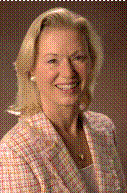
Linda S. Adams
|
Linda Adams was appointed by California State Governor Arnold Schwarzenegger in May 2006 as Secretary of the California Environmental Protection Agency (Cal EPA) – making her the first woman to serve as head of the agency. During her two years as Secretary, Adams served as lead negotiator on AB 32 – the Global Warming Solutions Act of 2006 and is now working closely with states, provinces and countries to reduce the effects of global warming. She launched the Green Chemistry Initiative and the State’s biomonitoring program, and has also made air and water quality a top priority. Adams has dedicated 32 years of service to California and earned an “Environmental Hero Award” from the California League of Conservation Voters. She currently serves on the Board of Directors of the Sacramento Local Conservation Corps and the San Joaquin Valley Partnership. She is Chair of the Climate Action Registry and is a long-time resident of Sacramento.
|
Francisco Acosta |
Director General, Electricity Generation, Transmission, and Transformation, Ministry of Energy (SENER), Mexico Before joining the Energy Ministry, Mr. Francisco Acosta was involved in the banking sector, providing his expertise in the creation of financial instruments for mortgage backed securities. He was also Telecommunications and Information Technology Coordinator for the Asia-Pacific Economic Cooperation Forum that took place in Mexico in 2002. In the energy sector, he began his professional career in the Mexican Energy Regulatory Commission (CRE) back in 1994, after which he became a consultant for the Trade Ministry on energy and deregulation of natural monopolies. In 2005 Mr. Acosta was appointed General Director for Generation, Transmission and Transformation of Electricity as part of the Professional Civil Service.
|
Francisco Barnes, Jr. |
Associate Principal, McKinsey & Co., Mexico Office – United States
|
Dallas Burtraw |
Dr. Dallas Burtraw, a Senior Fellow at Resources for the Future, conducts research on the design of environmental regulation, the costs and benefits of environmental regulation, and the regulation of the electricity industry. Burtraw recently investigated the effects of emissions trading to achieve carbon dioxide reductions on the performance of the electricity sector, and has also advised state and regional efforts. He has evaluated the use of emission trading to achieve carbon emission reductions in the EU. He also helped to evaluate the cost-effectiveness of trading programs for nitrogen dioxide in the eastern United States and sulfur dioxide trading programs under the Clean Air Act Amendments. Burtraw recently contributed to the valuation of the benefits of ecological improvements due to reduced acidification in the Adirondacks. He holds a Ph.D. in economics and a master’s degree in public policy from the University of Michigan and a bachelor’s degree from the University of California, Davis.
|
Odon de Buen |
President, Energía Tecnología y Educación, Mexico
|
Carlos De Regules |
Director General of Environmental Protection, Petróleos Mexicanos (PEMEX), Mexico
|
Robert Noël de Tilly |
Robert Noël de Tilly has been a senior administrator in the Ministry of Sustainable Development, Environment and Parks of Québec since 1995. He was successively Coordinator for the plan to eliminate PCBs, Director of the Office on Climate Change, Director of Air Quality Policies and Special Adviser for Climate Change attached to the Office of the Assistant Deputy Minister for Climate Change.
|
Juan Rafael Elvira Quesada |
Secretary of the Environment and Natural Resources (SEMARNAT), Mexico
|
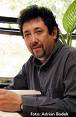
Adrián Fernández |
Adrián Fernández Bremauntz is a Biologist with an MSc in Environmental Technology from the Imperial College of Science, Technology and Medicine in London, UK and a PhD in Environmental Science from the same Institution. He also carried out post-doctorate research activities at the Harvard School of Public Health with support from the McNamara Fellowships Program of the World Bank. Dr. Fernández has experience as consultant for both the private and public sector, including the World Health Organization (WHO) and the United Nations Environment Program (UNEP). He is author and co-author of several articles and books. He has been occasional lecturer and guest instructor at the Harvard School of Public Health. Since 1995, Dr. Fernández has occupied senior positions at the Environment Secretariat: General Director for Environmental Management and Information (1995-2000) and General Director for Research on Urban, Regional and Global Pollution (2001-2005). He was in charge of the negotiations with the Japanese government that led to the creation of the National Center for Environmental Research and Training, the best equipped laboratory in Latin America to carry out pollution exposure studies. He was a pioneer in the assessment of commuters´exposure to air pollution in Mexico, including the adaptation of a methodology to carry out the first comprenhensive assessment of the personal exposure changes in commuters before and after the construction of the first bus rapid transit in Mexico City. In March 2005 he was appointed President of the National Institute of Ecology, the research and think tank agency within the Environment Secretariat in Mexico. He served as member of the Bureau for Latin America at the Commission for Sustainable Development. For many years he represented Mexico at the OECD Environmental Performance of Countries work-group and he is now member of the Climate Change Annex I Expert Group also at the OECD.
|
Luis Miguel Galindo Paliza |
Mr. Galindo has been recently appointed at the Sustainable Development and Human Settlements Division of ECLAC as lead economist for the studies on the economics of climate change in South America. Before 2009, he was professor of economics at CIDE and at the Faculty of Economics at the Universidad Nacional Autónoma (UNAM) of México. Previously, he worked on economic forecasting in some financial consultancy firms and international organizations. He studied economics at the UNAM and obtained his Ph D at the Univesity of Newcastle upon Tyne, UK. He has a long experience on climate change issues, gained as general coordinator of the Mexican study of the economics of climate change, ordered by the Ministries of Treasury
|
José Antonio González Anaya |
Ministry of Finance (SHCP), Mexico
|
Steven Gray
|
Steven leads the UN regulatory and policy stream and advices Climate Change Capital’s funds on policy and regulatory developments of the international carbon market and broader international climate policy developments. In relation to CCC’s research programme he focuses on financing mechanisms and financial products to support policy incentives.
|
Angel Gurría |
Secretary General, Organization of Economic Cooperation and Development (OECD) As Mexico’s Minister of Foreign Affairs from December 1994 to January 1998, he made dialogue and consensus-building one of the hallmarks of his approach to global issues. From January 1998 to December 2000, he was Mexico’s Minister of Finance and Public Credit. For the first time in a generation, he steered Mexico’s economy through a change of Administration without a recurrence of the financial crises that had previously dogged such changes. As OECD Secretary-General, since June 2006, he has reinforced the OECD's role as a ‘hub” for global dialogue and debate on economic policy issues while pursuing internal modernization and reform. Under his leadership, OECD has agreed to open membership talks with Chile, Estonia, Israel, Russia and Slovenia and to strengthen links with other major emerging economies, including Brazil, China, India, Indonesia and South Africa, with a view to possible membership. Mr. Gurría is an active participant in various international not-for-profit bodies, including the Population Council, based in New York, and the Center for Global Development based in Washington. He chaired the International Task Force on Financing Water for All and continues to be deeply involved in water issues. He is a member of the International Advisory Board of Governors of the Centre for International Governance Innovation, based in Canada, and was the first recipient of the Globalist of the Year Award of the Canadian International Council to honour his efforts as a global citizen to promote trans-nationalism, inclusiveness, and a global consciousness. Mr. Gurría holds a B.A. degree in Economics from UNAM (Mexico), and a M.A. degree in Economics from Leeds University (United Kingdom). He speaks: Spanish, French, English, Portuguese, Italian and some German.
|
Sandra Herrera |
Undersecretary for Environmental Regulation, SEMARNAT, Mexico
|
Todd Johnson |
Senior Energy Specialist, World Bank Todd Johnson is currently an energy specialist in the Sustainable Development Department of the Latin American and Caribbean (LAC) Region and works extensively on bioenergy issues in Brazil, Mexico, and Colombia. He has worked at the World Bank since 1991 on a broad range of energy and environment topics, including climate change mitigation (energy efficiency, renewable energy) and air quality. Prior to joining LAC, he was Team Leader for Climate Change in the Environment Department, and spent nine years as an environmental economist in the Bank’s East Asia Region, working primarily on China. Dr. Johnson has coauthored numerous reports, including An Economic Analysis of Biodiesel in Brazil (World Bank, 2008, forthcoming), Potential for Biofuels for Transport in Developing Countries (World Bank, 2005), and Clear Water, Blue Skies: China’s Environment in the New Century (World Bank, 1997). Prior to joining the World Bank, he spent five years at the National Academy of Sciences running an economics education and research program in China and was a post-doctoral fellow at the East-West Center in Hawaii focusing on China’s energy sector.
|
Arne Jungjohann |
Arne Jungjohann is the Program Director for Environment of the Heinrich Böll Stiftung in Washington, DC, a foundation that is affiliated with the German Green Party Bündnis 90/Die Grünen. In his work he focuses on transatlantic cooperation on climate and energy policies like cap-and-trade and feed-in tariffs for green power. In addition, Arne leads the Global Dialogue Program that focuses on a fair global climate deal. Before joining the foundation Arne served as a Senior Advisor for the Green Party in the German Bundestag. Among other things, he worked on Germany's Renewable Energy Act as well as on international negotiations on climate. He holds a Masters of Arts in Political Science of the Free University Berlin.
|
Rodolfo Lacy |
He is the Research Coordinator for Energy and Environment Projects at the Mario Molina Center (Centro Mario Molina), Mexico. He coordinated and edited the first State of the Environment Report in Mexico, and is the author of the book "Air Quality in the Valley of Mexico." In 1994 he was awarded with a fellowship from the Rockefeller Foundation in the program "Leadership for the Environment and Sustainable Development" (LEAD). He is the founding president of the Environmental Engineers Association of Mexico, and former head of advisors to the Minister of the Environment and Natural Resources for Mexico. He holds a B.S. in Environmental Engineering from the Metropolitan Autonomous University in Mexico, and an M.S. in Environmental Planning from the Massachusetts Institute of Technology.
|
Adriana Lobo |
Director, Center for Sustainable Transport (CTS), Mexico An urban visionary with executive talent, Adriana Lobo loves to work to improve local competitiveness, environmental conditions and quality of life in Mexican cities through sustainable mobility. Originally a consultant for the EMBARQ network, Adriana was elected Director of CTS Mexico in 2003. Adriana graduated as a Civil Engineer at the Escola Politécnica of the University of Sao Paolo and completed academic credits to obtain the Master’s in Business Administration at the Autonomous Technological Institute of Mexico (ITAM). She has worked with prestigious transport consultants in Brazil and Mexico, and after a decade of directing urban and regional transport planning projects in seven Latin American countries, she founded her own transport consultancy in Mexico in 2001. Adriana’s business vision and political sensitivity have enabled her to transform CTS Mexico in just 5 years. Since 2003, CTS Mexico has increased its personnel from 5 to 25 full-time professionals, has multiplied its budget 10 times, has attracted national and international talent, and has evolved from a local program to a non-profit national organization.
|
Ricardo Martinez |
Ricardo Martinez is Deputy Secretary for Border Affairs for the California Environmental Protection Agency. Ricardo serves as chief advisor to the Secretary for Environmental Protection and the Governor on policy and environmental protection matters related to Mexico and the U.S.- Mexico Border Region. Ricardo is responsible for managing the Border Environmental Program and the Agency’s initiatives related to California-Mexico Affairs, as well managing the newly created California-Mexico Border Relations Council. Prior to joining Cal/EPA, Ricardo served as the Senior Policy Advisor at the State Water Resources Control Board and has held technical and managerial positions for the California Department of Food and Agriculture, Department of Pesticide Regulation, California Integrated Waste Management Board and Department of Fish and Game. Since 1994, Ricardo has worked on California-Mexico environmental issues, specifically addressing water and air quality issues, acquiring NAFTA financing for environmental infrastructure projects, building relationships at the three levels of government in Mexico, coordinating the Ten States Retreat, the California Delegation to the U.S.- Mexico Border Governors Conference and developing the concept and structure of the Border 2012 Environmental Program. Ricardo also coordinates with other state agencies on developing strategic collaboration efforts to address environmental impacts from Mexico to California, as well as assisting the boards, departments, and offices within Cal/EPA to address longstanding and emerging environmental challenges along the California-Baja California border region. Under Ricardo’s direction, Cal/EPA has been one of few State agencies to sign environmental agreements with the Republic of Mexico. Ricardo currently serves as the State Representative to the Government Advisory Committee to the Commission for Environmental Cooperation, a position appointed by the USEPA Administrator. Ricardo holds a Bachelor of Arts in Animal Biology from California State University, Sacramento and is a Graduate of the California Leadership Institute.
|
Carlos Mena |
Centro Mario Molina, Mexico Carlos Mena es Ingeniero Químico por la Facultad de Química de la Universidad Nacional Autónoma de México y estudió la Maestría en Ciencias en el Departamento de Ingeniería Química de la Universidad de California en Berkeley. El Ing. Mena cuenta con una experiencia laboral de 32 años (1966-1998) en Petróleos Mexicanos donde trabajó las áreas de Diseño de Reactores Químicos, Estática Aplicada, Desarrollo Operacional, Distribución de Combustibles y Planeación Estratégica. En el periodo 1999 – 2000, estuvo a cargo de la División Industrial del Bureau Veritas Mexicana y fungió como asesor en el área de energía para el Secretario de Medio Ambiente y Recursos Naturales de México en el periodo 2001-2004. Asimismo, cuenta con una experiencia docente de 43 años en la Facultad de Química de la Universidad Nacional Autónoma de México, donde actualmente imparte la cátedra de Ecología Industrial. Desde Enero de 2005, es el Director Ejecutivo del Centro Mario Molina para Estudios Estratégicos sobre Energía y Medio Ambiente. El Ing. Mena cuenta con más de 40 publicaciones en las áreas de Optimización y Simulación de Procesos, Modelación de la Contaminación del Aire y de Planeación de Sistemas Energéticos.
|
Ricardo Ochoa |
International Relations, Ministry of Finance (SHCP), Mexico Mr. Ochoa holds a BA in Economics from the Universidad Autonoma Metropolitana (Mexico), a Master in Public Policy from The Johns Hopkins University (Washington D.C.) and a Master of Sciences from the Instituto Polítecnico Nacional (Mexico). He participated in other postgraduate studies at the George Washington University (Washington D.C.) and a program in the International Monetary Fund Institute (Washington D.C.). He has held the following positions:
In his current position he is responsible for the designing and execution of the financial relations with other governments, international institutions (the IMF, the UN, the OECD and CEPAL), multilateral banks (IADB, WB, EBRD, EIB, CDB and BCIE), international fora (G-20 and APEC), and international initiatives (Partnership for Prosperity, Security and Prosperity Partnership of North America and San José Agreement). |
Juan Pablo Osornio |
International Policy Analyst, Center for Clean Air Policy (CCAP), United States Juan Pablo's experience with environmental issues is based primarily on CDM project development and international environmental policy. He has more than five years of experience with non-profits and businesses, where he has contributed significantly to goal-setting and strategy design. At CCAP, Juan Pablo works primarily for the Developing Countries and Sectoral Study programs. His primary objective is to increase the participation of Developing Countries to combat climate change through innovative and cost-effective approaches. Juan Pablo holds a B.A. in International Relations from the Instituto Tecnologico Autonomo de Mexico in Mexico City, was the founder of LAMAT, a Mexican development NGO, and holds an MPA in Environmental Science and Policy from Columbia University.
|
Blas Pérez Henríquez directs the Goldman School of Public Policy’s Center for Environmental Public Policy (CEPP) at the University of California, Berkeley. He is particularly interested in creating innovative and cost-effective policies to address global environmental problems such as climate change and biodiversity decline. He is focused on bringing such policies to the developing world. He currently conducts research on topics such as environmental finance and carbon markets. He participates regularly as an academic observer at the Annex I Expert Group of the United National Climate Change Convention, a support group at the Organization for Economic Cooperation and Development (OECD) that develops policy alternatives to address global warming.
|
|
Gabriel Quadri |
Born in México City; he has a degree in Civil Engineering from Universidad Iberoamericana (México). He earned a Masters degree and a PHD Candidacy in Economics from the University of Texas at Austin. He worked early in his career at Banco de México (Central Bank of México) as an economic analyst. Later on he became a militant environmentalist and a consultant, before being recruited by the México City Government to head its Office of Environmental Planning in charge of fighting air pollution during the most critical years. Afterwards he went to the Federal Government, to the National Institute of Ecology (INE), on those days the highest national environmental authority. At INE, first he acted as Director General for Environmental Regulation; next he was designated President, position which he held for four years. Once fulfilled this endeavor at the end of 1997, he went to the Mexican Business Council for Sustainable Development as Director General, position kept until 2003. Then he co-founded a consultancy firm on environment providing services to the public and the private sector and international organizations. Mr. Quadri has written numerous books and papers on environmental policy and sustainable development, has participated in various academic programs at well known Mexican universities. He currently writes for the national newspaper (El Economista) and collaborates in a nation-wide radio station as commentator (NRM).
|
Montserrat Ramiro |
Carbon Finance PEMEX, Mexico
|
Juan Rosellón |
Professor, Economics, CIDE, Mexico Mr. Rosellón is a tenured professor at the Department of Economics of the Centro de Investigación y Docencia Económicas (CIDE) in Mexico City. He was Repsol-YPF-Harvard Kennedy School Senior Fellow at the Kennedy School of Government of Harvard University during 2005 as well as during the 2003-2004 academic year. In the 2002-2003 academic year, he was also Senior Fellow at the Kennedy School as a Fulbright Scholar. He has been at Harvard on a visiting position carrying out a research project on the reform process of the Mexican electricity sector. At CIDE he leads a program on applied regulatory economics that has received research grants from the Mexican Energy Regulatory Commission (CRE), the Mexican Science and Technology Foundation (CONACYT), the World Bank, the Tinker Foundation, Stanford University, and the Naumann Foundation. Academic research on regulatory policy problems faced by decision makers in Mexico is carried out under this program. Professor Rosellón was also the Director of CIDE’s Workshop on Energy Economics and Regulation aimed to train Mexican government officials in the energy sector. Additionally, he was Editor of Economía Mexicana (2000-2002) --one of the leading journals on Mexican Economy-- as well as Secretary of the Mexican Chapter of the International Association for Energy Economics (1999-2001), and member of its advisory board since October 2001. He was Chief Economist at CRE (1995-1997) during which time he had a leading participation in all economic policy decisions regarding the regulatory reform process of the Mexican natural gas and electricity sectors. He was a faculty member of the Program on Privatization, Regulatory Reform and Corporate Governance at Harvard University (1997-2000), and at Princeton University (2001). He is member of the Mexican National System of Researchers (SNI) since 1994. He currently holds level II at SNI (level III is the highest level). In 1994, he received the National Award in Economics from Mexican president Ernesto Zedillo. Professor Rosellón earned his Ph.D and M.A degrees in Economics from Rice University. He also obtained M.Sc and B.Sc degrees in Mathematics, as well as a B.A degree in Economics, from the National University of Mexico (UNAM). He won the Gabino Barreda Medal, which is the most important student honor granted by UNAM. He is also biographee of the 2005 and 2006 editions of Who’s Who in the World, the 2005-2006 and 2006-2007 editions of Who’s Who in Science and Engineering, and the 2006 edition of Who’s Who in America. Juan Rosellón has numerous publications on the area of regulatory economics, and has presented his work in around 70 international seminars and congresses.
|
Mark Trexler |
Director, Climate Strategies and Markets, DNV Climate Change Services, United States Mark C. Trexler has more than 25 years of energy and environmental experience, and has focused on global climate change since joining the World Resources Institute in 1988. He is now president of Trexler Climate + Energy Services, which provides strategic, market, and project services to clients around the world.
|
Fernando Tudela |
Undersecretary, Ministry of the Environment and Natural Resources (SEMARNAT); Vice Minister for Planning and Environmental Policy and the Principal Negotiator of Climate Change Issues in Mexico.
|
Charles Williams |
Lawrence Berkeley National Lab, United States Recent Projects
Education
Background
|
Dimitri Zenghelis |
Dimitri Zenghelis headed the Stern Review Team at the Office of Climate Change in London and currently advises Cisco’s long term innovation group as Chief Economist of their Climate Change practice. Previously, he was a senior economist who has spent a year working with Lord Stern on the Stern Review on Economics of Climate Change, commissioned by the then Chancellor Gordon Brown. He continues to act as an advisor to the UK Government and Lord Stern at the LSE where he is a Senior Visiting Fellow at the Grantham Institute on Climate Change. He is also an Associate Fellow at the Royal Institute of International Affairs (Chatham House). Dimitri joined HM Treasury in 1999 providing economic analysis and advice for the UK Government as Head of Economic Forecasting and Head of the European Monetary Union Analysis Branch. |










back to top